Endangered
Tliltocatl schroederi
Brachypelma schroederi
The Mexican black velvet tarantula, Tliltocatl schroederi (listed by the IUCN as Brachypelma schroederi), is a dark, medium-sized ground spider from the Valles Centrales of Oaxaca, Mexico. The IUCN assessed it as Endangered in 2019, with a fragmented, shrinking range and collection for the pet trade among the listed threats.
How to recognise it
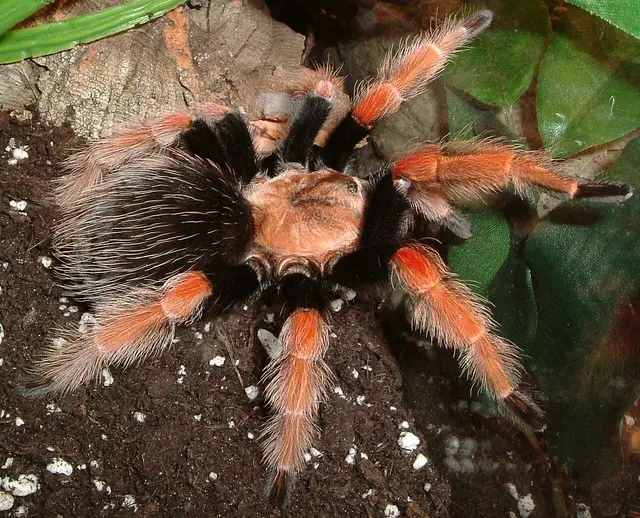
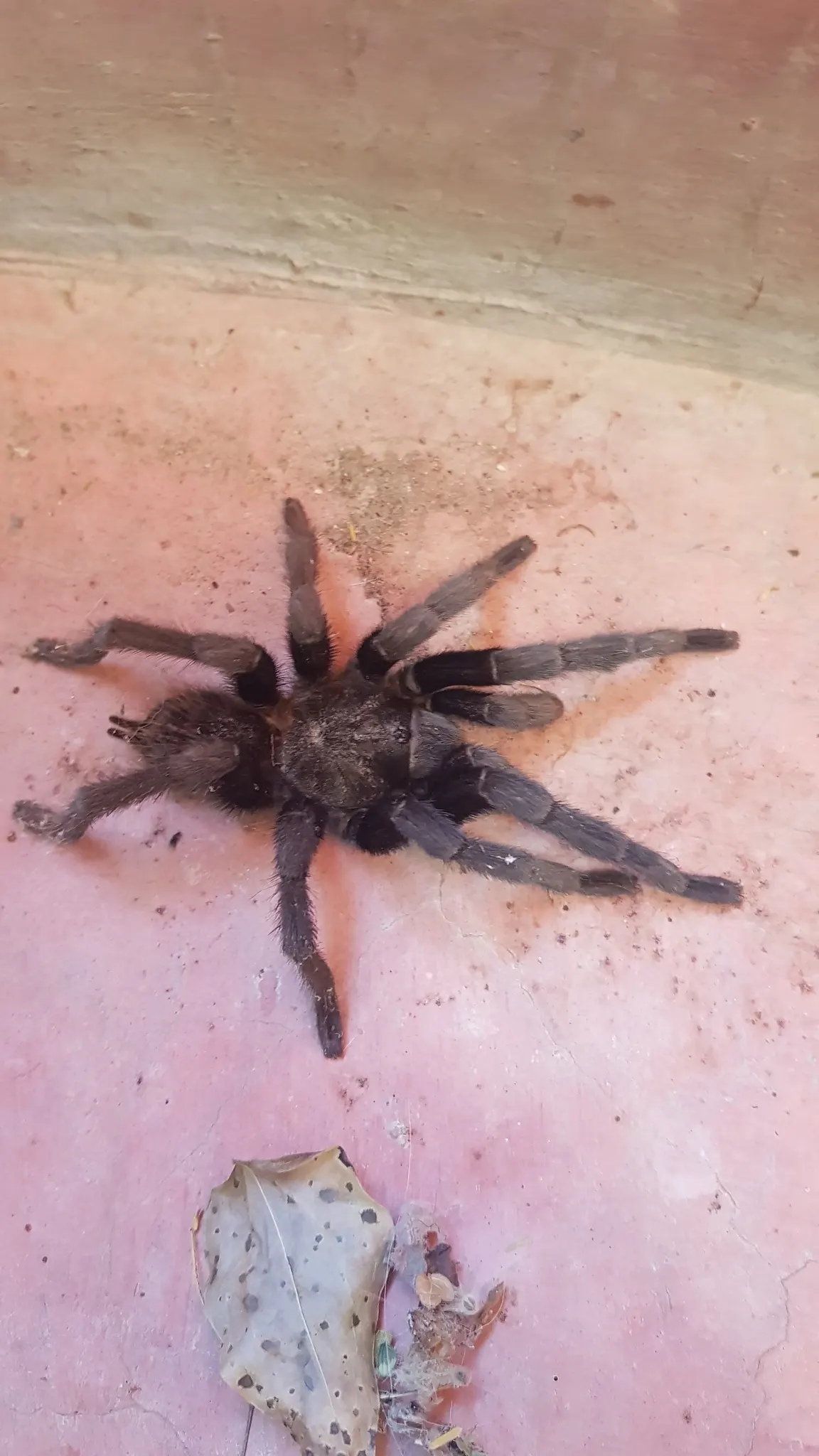
Many of its relatives in the old genus Brachypelma are known for red hairs on the legs and abdomen. This one is dark brown to black, with fewer red hairs than its relatives usually show. The genus name Tliltocatl combines Nahuatl words for black and spider.
It is a medium-sized tarantula. Males reportedly measure about 34 to 36 mm in body length and females about 48 mm. The fourth leg is the longest, at around 61 mm in males and 47 mm in females, not counting the coxa.
A name that changed
Jan-Peter Rudloff described it in 2003 as Brachypelma schroederi, reportedly naming it for Steffen Schröder, a spider keeper who bred it. The first specimens were said to come from near Acapulco, but that locality appears to be wrong. In 2020 Jorge Mendoza and Oscar Francke split Brachypelma after their genetic and anatomical work showed it was not a natural group, and moved this spider to a new genus, Tliltocatl. The World Spider Catalog now uses that name, while the IUCN assessment still lists the older one.
Where it lives
The species is known from the Valles Centrales de Oaxaca, in Oaxaca State, Mexico. The IUCN gives an extent of occurrence of about 3,775 square kilometres and an area of occupancy of about 2,688 square kilometres, across roughly 100 locations at 1,040 to 3,000 m above sea level.
Habitats listed are tropical dry forest (the main one), dry shrubland and heavily degraded former forest. A hobbyist care sheet describes it as an opportunistic burrower that uses natural crevices and abandoned burrows in semi-arid, rocky country, though that account comes from a hobbyist rather than a field study.
Pins are Wikidata “endemic to” fields. Orange dots, when present, are GBIF occurrence tiles — survey bias included.
Why it is in trouble
The 2019 assessment, under criterion B1ab(i,ii,iii,iv,v), says the range is severely fragmented and still shrinking, and lists the trend as decreasing. A generation is put at about 7 years. Threats named are small-holder farming and grazing, housing, roads and railways, and collection with the species itself as the target.
The IUCN lists the spider's use as pets and display animals, along with captive production. One hobby care sheet calls it relatively rare in the trade. Anyone considering a Brachypelma-type tarantula should check /exotic-pet-laws-by-state/ before buying.
What is being done
All Brachypelma species were placed on CITES Appendix II in 1994, restricting international trade. This species was not named in that listing because it had not yet been described, but the World Spider Catalog notes that trade in it is restricted by CITES. The IUCN records international legislation and trade controls, and conservation sites identified over part of the range. Whether it occurs in a protected area is recorded as unknown.
Actions called for include protecting habitat, managing harvest and trade, species recovery work and conservation payments to landholders.
Sources
Written for this catalog in our own words from the sources below, checked against them on 12 November 2026. Population figures are estimates and carry the year they were made. Status and assessment year: IUCN. 2026. The IUCN Red List of Threatened Species. Version 2026-1. iucnredlist.org.