Critically Endangered
Bolson tortoise
Gopherus flavomarginatus
The Bolson tortoise (Gopherus flavomarginatus) is the largest tortoise in North America, and it survives in the wild only in a small desert basin in north-central Mexico. The IUCN Red List rated it Critically Endangered in 2018, with an estimated 2,500 animals left and a population still falling.
How to recognise it
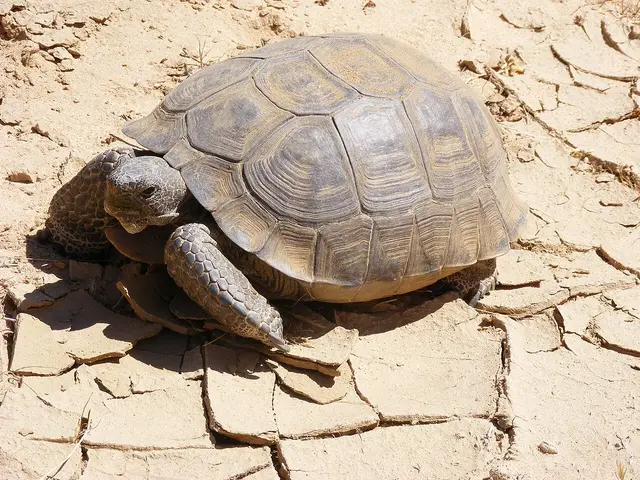
This is a big, heavy tortoise. The shell of an adult is about 46 cm (18 in) long, which makes it the biggest of the six tortoise species native to North America. It goes by several other names, including the Mexican giant tortoise and the yellow-bordered tortoise.
Zoologist Hobart Legler described the species in 1959. It is a desert burrower, and its tunnels shelter many other animals, which Turner Reserves credits with supporting desert biodiversity.
Where it lives
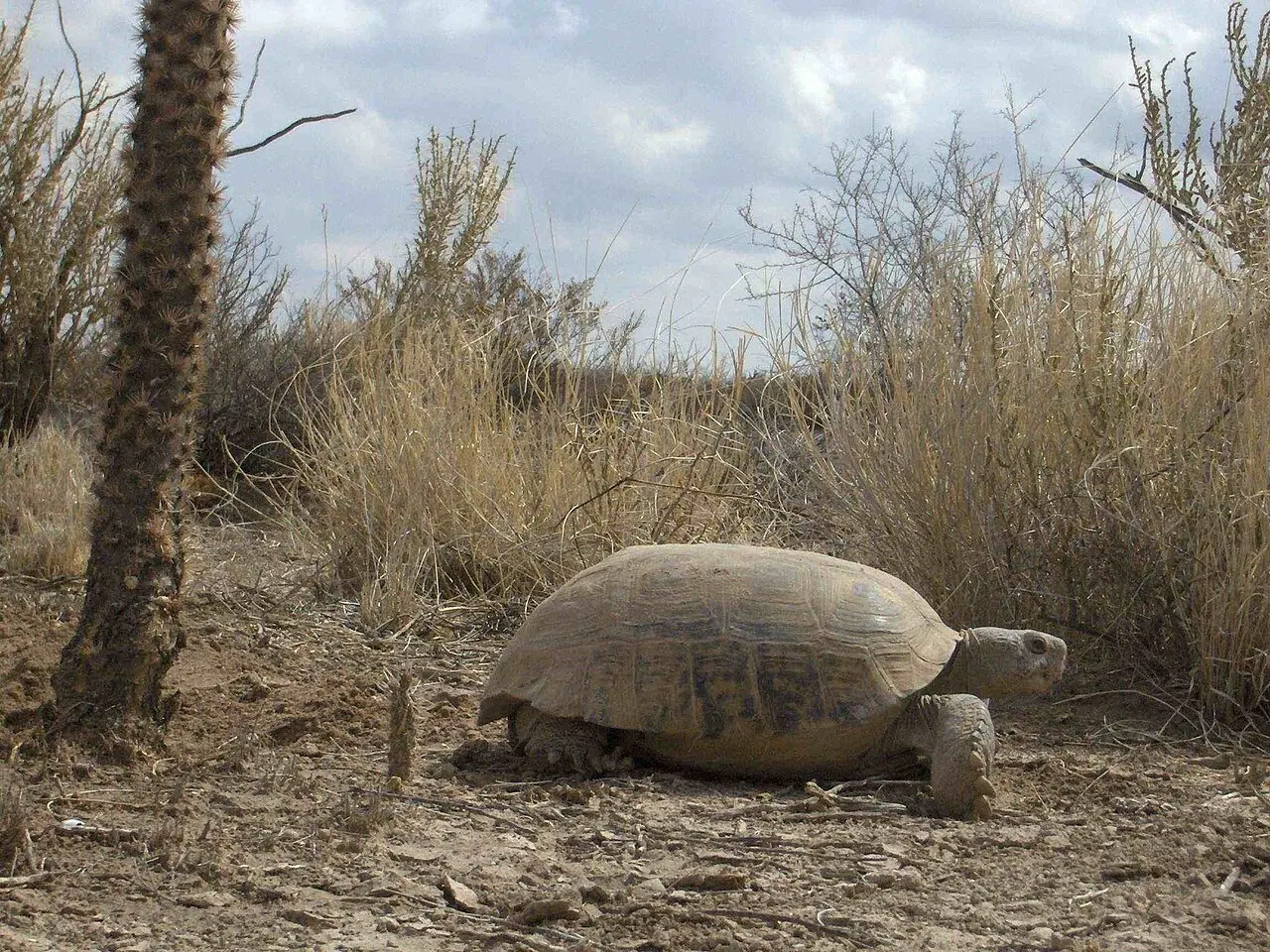
The wild population is confined to the Bolsón de Mapimí, a basin of the Chihuahuan Desert where the Mexican states of Chihuahua, Durango and Coahuila meet. The IUCN records it living at roughly 1,000 to 1,400 m above sea level, in hot desert and dry subtropical shrubland.
Fossils place the species in the Chihuahuan Desert from Arizona to western Texas as recently as the late Pleistocene, according to a 2014 PLoS ONE study. Turner Reserves says it died out in the United States more than 10,000 years ago.
Pins are Wikidata “endemic to” fields. Orange dots, when present, are GBIF occurrence tiles — survey bias included.
Why it is in trouble
The 2018 assessment estimated about 2,500 animals in the wild and a continuing decline, with a reduction of around 80 percent judged to be under way. An older estimate from 1991, using 1983 data, put the total at fewer than 10,000, so the drop has been steep and the older number should not be read as current.
The IUCN lists small-holder and industrial farming, housing, roads and railways, and collection of the tortoise itself as threats. Tortoises have reportedly been taken for food and for the pet trade. Large-scale corn farming reportedly began inside the Mapimí Biosphere Reserve after ethanol plants were built, and some fields were ploughed in tortoise habitat. In some areas, brush is also cleared for cattle.
What is being done
The 340,000-hectare Mapimí Biosphere Reserve was created in 1979 partly to protect the tortoise. The IUCN notes that 71 to 80 percent of the population lives inside protected areas, that a recovery plan and monitoring scheme exist, and that international trade is controlled. The species is on CITES Appendix I.
In the United States, the Turner Endangered Species Fund has bred the tortoise since 2006. The program grew from 23 adults to more than 800 animals on Turner properties in New Mexico. Since 2021 it has released over 150 young tortoises at four sites there, with survival above 80 percent. In 2024 it moved 20 tortoises to Sevilleta National Wildlife Refuge, and the U.S. Fish and Wildlife Service began a formal recovery program. The goal is three or more self-sustaining free-ranging populations by 2031.
A 2014 PLoS ONE study found that a captive group in Arizona, the source of the New Mexico founders, holds about 97.5 percent of the genetic diversity sampled in the wild, though diversity in both groups is very low. It also found that tortoises at the El Paso Zoo were hybrids with the gopher tortoise, and ruled them out for release.
Sources
Written for this catalog in our own words from the sources below, checked against them on 12 November 2026. Population figures are estimates and carry the year they were made. Status and assessment year: IUCN. 2026. The IUCN Red List of Threatened Species. Version 2026-1. iucnredlist.org.