Critically Endangered
Bavarian pine vole
Microtus bavaricus
The Bavarian pine vole (Microtus bavaricus) is a mouse-sized rodent from the northern Alps, known from a few spots in Bavaria and Tyrol. It went unrecorded in Bavaria for more than 60 years until 2023. The IUCN Red List rates it Critically Endangered (assessment 2019), and a zoo breeding programme backs it up.
How to recognise it
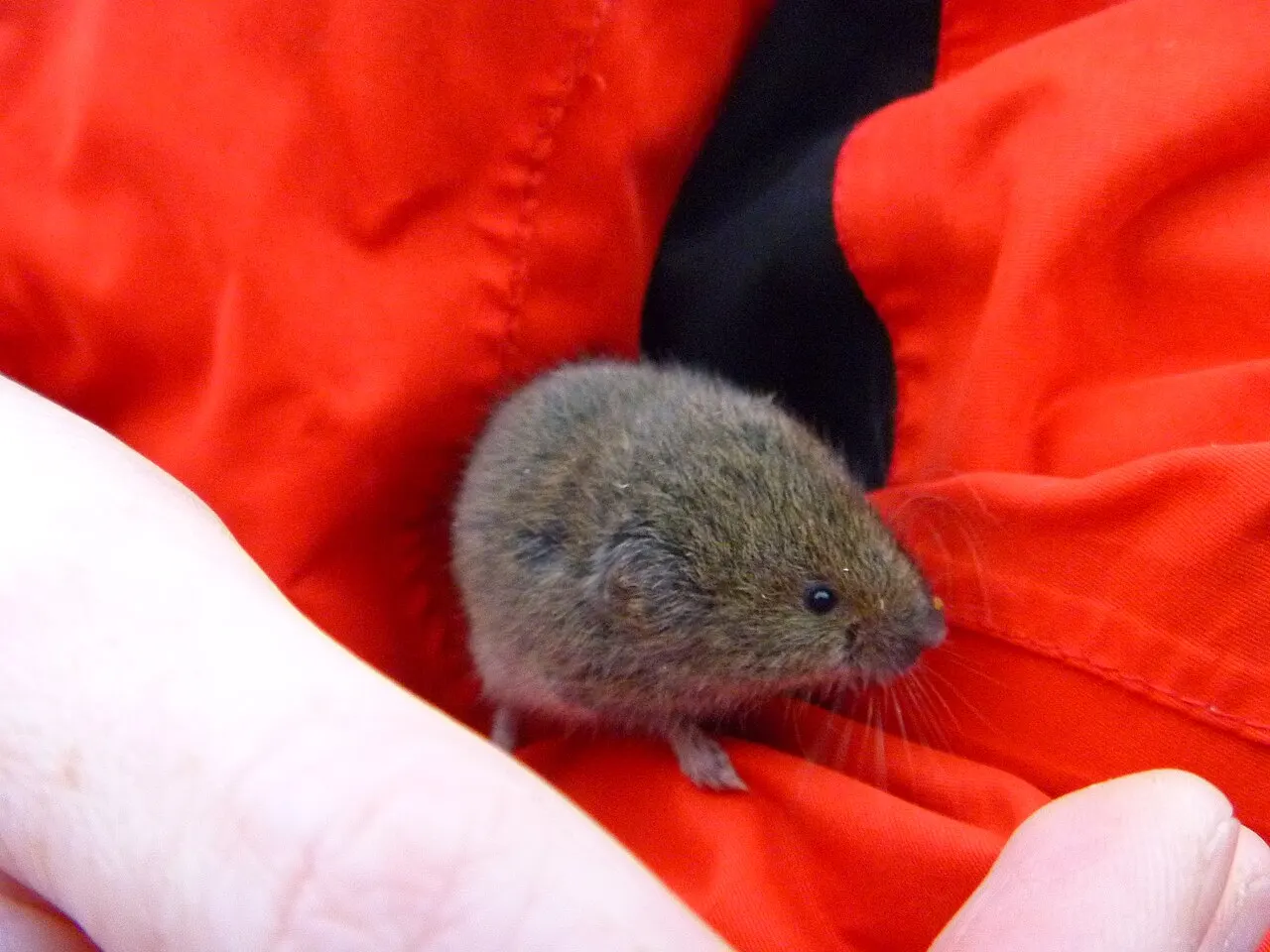
It is a small, compact vole, about 9 to 10 centimetres long and weighing roughly 18 to 28 grams. The eyes are very small and the ears are so short they sit hidden in the fur, which suits an animal that spends much of its life in burrows.
Even experts struggle to separate it from a close relative, the pine vole Microtus subterraneus, on appearance. Wildlife camera images can't tell the two apart reliably, so researchers confirm identity with genetics.
Where it lives
The species was described in 1962 by the German zoologist Claus König from animals collected near Garmisch-Partenkirchen in Bavaria. The IUCN lists Germany and Austria, counts the species as occupying a single location, puts its extent of occurrence at about 16 square kilometres, and calls the population severely fragmented.
Elevations of roughly 600 to 1,000 metres are reportedly typical. One oddity: an animal found in eastern Croatia in 2008 differs only slightly in its genes from the Bavarian species.
Pins are Wikidata “endemic to” fields. Orange dots, when present, are GBIF occurrence tiles — survey bias included.
How it lives
What it needs is not fully understood. At Garmisch-Partenkirchen and in the Rofan it used semi-open ground, a mosaic of single trees, small groups of trees and open meadow, with deep stable soil where burrow systems can last for years. The 2023 Bavarian find, though, was mostly in open heather and Scots pine forest, so Bavaria's wildlife agency plans more work on habitat needs.
Little has been published on diet or breeding in the wild.
A species that vanished and came back
After 1962 nobody found it at the original site, despite repeated searches from 1990 onward. Human interference with the habitat is the likely reason it disappeared there. The type site was later described as an intensively grazed pasture with a small mixed woodland, and live traps set there in the recent searches caught nothing.
A population turned up in the Rofan mountains of Tyrol around 2000 to 2001, just over the border. Surveys there in 2017 showed that wildlife cameras can detect the species. In 2018, animals captured in Bavaria proved by genetics to be Microtus subterraneus instead. Then, in autumn 2023, camera work and live trapping near Mittenwald produced one animal whose droppings matched a specimen König had collected. It was the first Bavarian record in more than 60 years.
Why it is in trouble and what is being done
The Red List counts the population as decreasing. The threats it records are housing and urban development, farming and grazing, and other changes to the ecosystem. Germany's national Red List treats the species as extinct or lost, and Austria's lists it as threatened with extinction.
Four voles from Tyrol were trapped and taken to the Alpenzoo in Innsbruck, where they breed, and young animals have gone to other zoos in Germany and Austria. A joint conservation project between the Alpenzoo and the Bavarian Environment Agency began in March 2025, with 75 percent of the funding from the EU's Interreg Bavaria-Austria programme. It covers monitoring in Bavaria and Tyrol, searches for unknown populations, habitat management, breeding with other zoos for possible release, and public education.
Sources
Written for this catalog in our own words from the sources below, checked against them on 12 November 2026. Population figures are estimates and carry the year they were made. Status and assessment year: IUCN. 2026. The IUCN Red List of Threatened Species. Version 2026-1. iucnredlist.org.




