Critically Endangered
Barbatula quignardi
Barbatula quignardi
The Languedoc stone loach (Barbatula quignardi) is a tiny bottom-dwelling fish of gravel and stone streams in southern France. The IUCN Red List assessed it as Critically Endangered in 2024, counting a single location and a range of only about 80 square kilometres.
How to recognise it
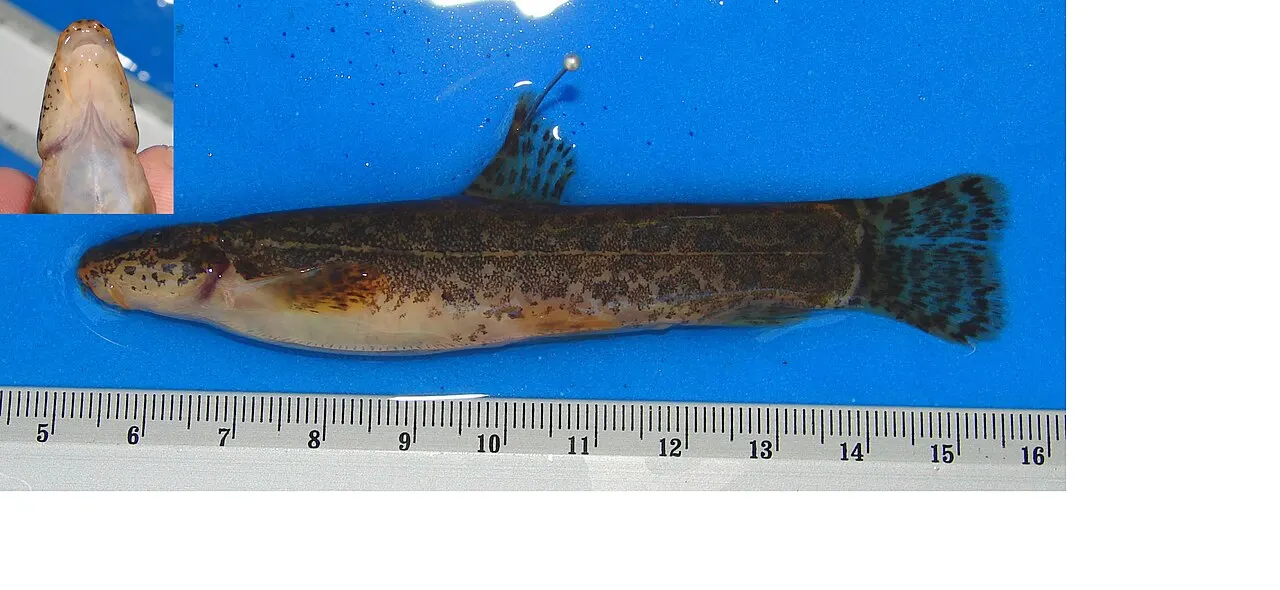
This is a small, slim stone loach, reaching about 7 cm in standard length. Fish begin to mature at around 4 cm.
Look for 2 to 4 irregular dark blotches along the back between the nape and the dorsal fin, and a tail fin that is only slightly notched rather than deeply forked. FishBase lists it as able to breathe air, either occasionally or obligately, without settling which.
Where it lives
The species was first described in 1967 by Băcescu-Meşter as a subspecies of the common stone loach. The name honours the ichthyologist Jean-Pierre Quignard, whose help let the describer obtain the original specimens.
How far its range runs depends on the source. FishBase gives southern France from the Lez to the Tech, plus the Adour and Garonne, and in Spain the Ebro and the streams between the Bidasoa and Nervión. The 2024 Red List assessment lists only France, with an estimated extent of occurrence of 80 square kilometres, an area of occupancy of 40 square kilometres and one location. Its habitat is permanent rivers and streams, and adults favour gravel to stone bottoms.
Its identity is also in question. In 2025 a Journal of Fish Biology study designated a neotype for the common stone loach from the Lez population long treated as this species. That casts doubt on whether the Lez fish deserves a species name of its own.
Pins are Wikidata “endemic to” fields. Orange dots, when present, are GBIF occurrence tiles — survey bias included.
Why it is in trouble
The assessment ties the risk to a very small area where habitat is still shrinking. Listed threats include groundwater pumping for household, farm and commercial use, nutrient pollution, recreation in the river and, in future, drought. The listed effects include ecosystem degradation, fish mortality, disturbance, competition and reduced breeding success.
In Spain, populations have reportedly been hurt by invasive species, among them the signal crayfish. The population trend is listed as unknown, and no population count exists.
What is being done
Between 41 and 50 percent of the population is recorded as living inside a protected area. The assessment records no recovery plan, no systematic monitoring scheme, no captive breeding and no invasive species control, so the fish is protected mostly by where it happens to live. It calls for research on population size and trends, life history, threats and conservation actions.
Sources
Written for this catalog in our own words from the sources below, checked against them on 12 November 2026. Population figures are estimates and carry the year they were made. Status and assessment year: IUCN. 2026. The IUCN Red List of Threatened Species. Version 2026-1. iucnredlist.org.




