Endangered
Brown-headed spider monkey
Ateles fusciceps
The brown-headed spider monkey (Ateles fusciceps) is a long-limbed, fruit-eating primate of the wet forests of Panama, Colombia and Ecuador. The IUCN Red List rates it Endangered (assessed 2021), with a decreasing population. Its Ecuadorian form is far worse off, rated Critically Endangered, with an estimated 250 animals left.
How to recognise it
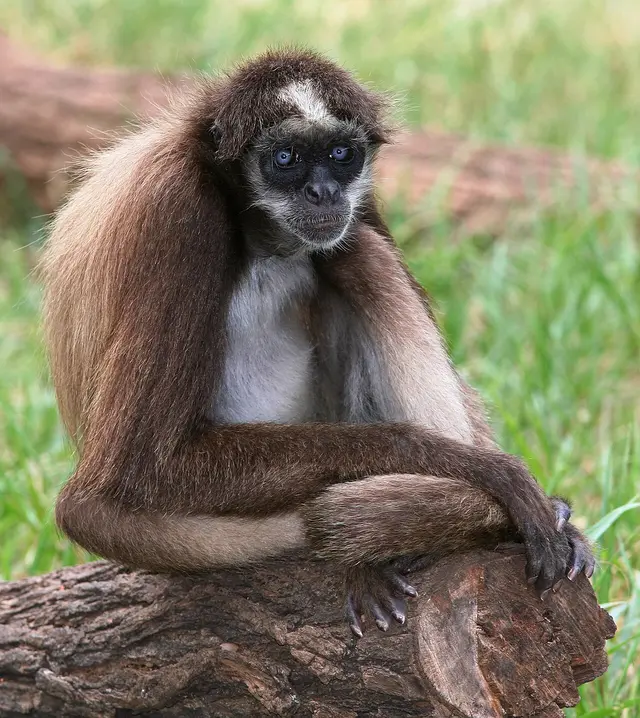
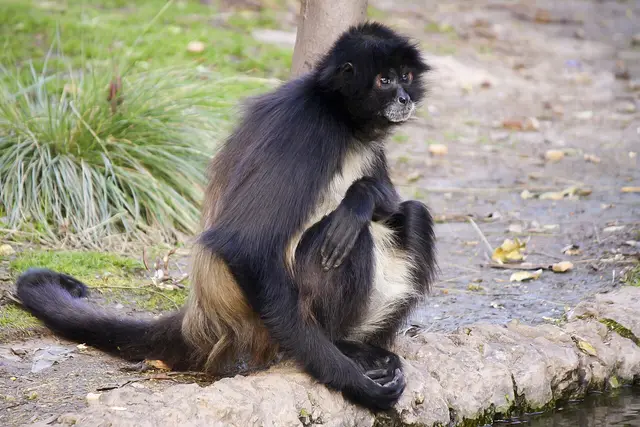
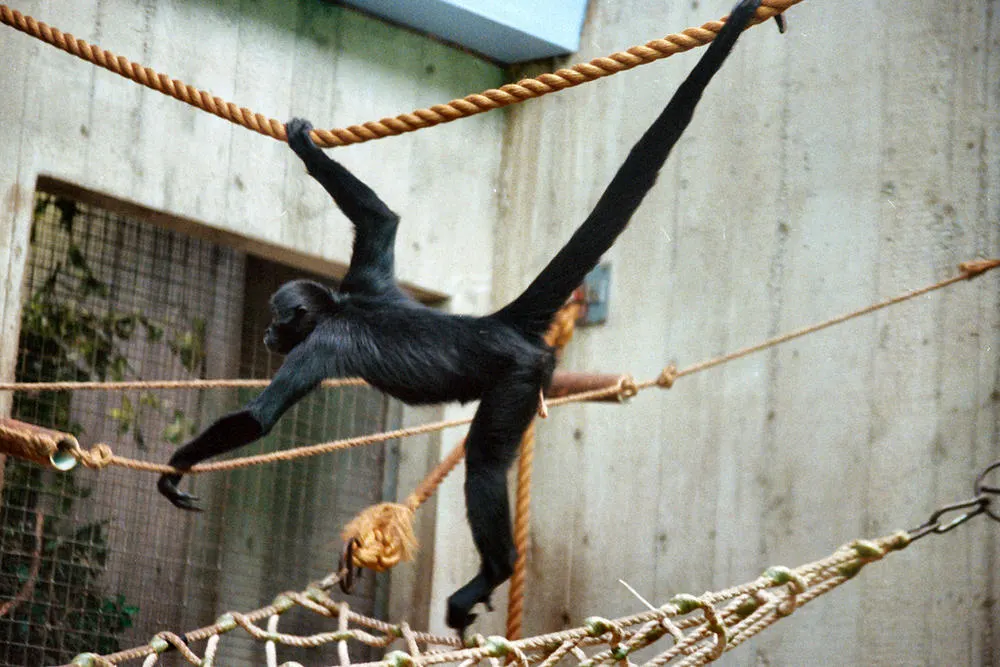
Like all spider monkeys, it has long thin limbs and a prehensile tail that works as a fifth hand. The body, without the tail, measures roughly 39 to 54 cm, and the tail adds another 71 to 86 cm. Adults weigh around 9 kg.
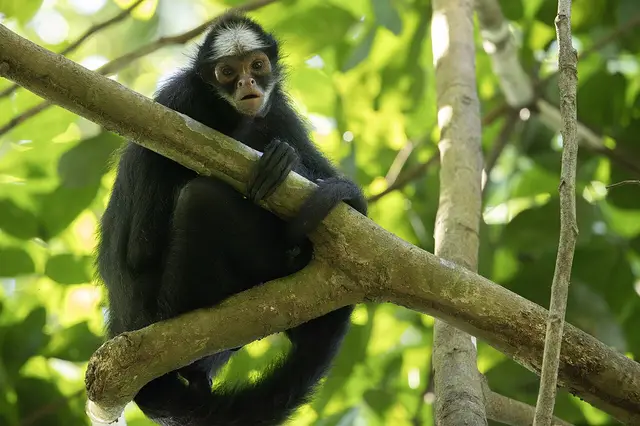
The two forms look different. The Ecuadorian one has a black or brown body and a brown head. The southern Colombian and Panamanian one is black all over, with a little white on the chin. The Red List treats it as a species of its own, though some primatologists, including Collins and Dubach (2001), have classed it as a subspecies of Geoffroy's spider monkey. IUCN's main English name is brown-headed spider monkey, and black-headed spider monkey is also in use.
Where it lives
The species ranges from eastern Panama and Colombia to north-western Ecuador. The Red List counts it as present in all three countries and records it in lowland moist forest, dry forest and montane moist forest, up to about 2,500 m.
The Ecuadorian form lives in humid forest between about 100 and 1,700 m, in the Tumbes-Choco-Magdalena region of the western lowlands, which has lost most of its original forest. The Colombian and Panamanian form uses dry, humid and cloud forest and reaches higher elevations.
Pins are Wikidata “endemic to” fields. Orange dots, when present, are GBIF occurrence tiles — survey bias included.
How it lives
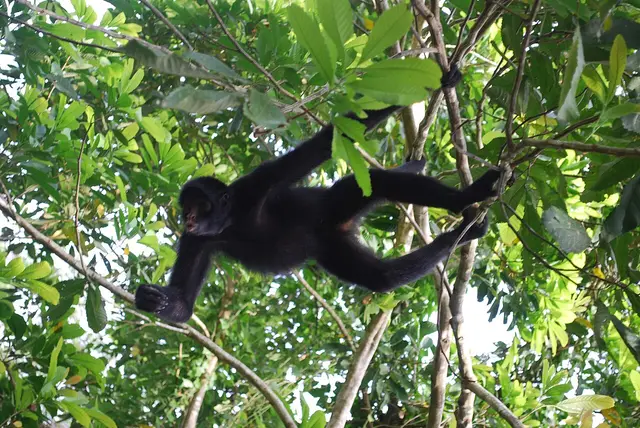
These monkeys are active by day and spend their lives in the trees, moving by climbing and swinging hand over hand. Fruit makes up about 80 percent of the diet. The rest is leaves, nuts, seeds, bark, insects and flowers. As they travel through the canopy they spread seeds, which helps keep the forest diverse.
A group can reach about 20 animals but usually travels in smaller parties. Breeding is slow. Gestation reportedly lasts roughly 226 to 232 days, a mother carries her infant for about four months, weaning comes at around 20 months, and females give birth about every three years. The Red List puts a generation at 15 years.
Why it is in trouble
The Red List estimates a population reduction of 50 to 55 percent over a period that covers both past and projected decline. It names loss and degradation of forest, and hunting for food, as the pressures. Spider monkeys are large and slow to reproduce, so a population that drops is slow to recover.
The Ecuadorian form is the most critical case. Earlier estimates, still cited in 2016 and again in 2021, put its total population at about 250 animals, thought to be confined to a few large patches of primary forest in the north-west. The Red List rates that subspecies Critically Endangered, while the Colombian and Panamanian subspecies is rated Vulnerable (both 2021).
In 2016 Cervera and Griffith reported a previously unknown group about 100 km south-west of the known range, in fragmented forest in Manabi province. Their report suggests the monkeys may persist as a metapopulation in modified land.
What is being done
The species is listed on CITES Appendix II and occurs in at least one protected area. The Red List names harvest management, captive breeding, education, awareness work and site management among the conservation actions relevant to it. Rainforest Concern supports one of the last populations of the Ecuadorian form in the Los Cedros Reserve. A grant from the Mohamed bin Zayed Species Conservation Fund in 2012 paid for population surveys, school workshops and support for a community ecotourism project in north-west Ecuador.
Sources
Written for this catalog in our own words from the sources below, checked against them on 12 November 2026. Population figures are estimates and carry the year they were made. Status and assessment year: IUCN. 2026. The IUCN Red List of Threatened Species. Version 2026-1. iucnredlist.org.
- IUCN Red List assessment, Ateles fusciceps (2021)
- IUCN taxon records for the two subspecies (API)
- Brown-headed spider monkey, Wikipedia
- Rainforest Concern, species spotlight (10 March 2021)
- Mohamed bin Zayed Species Conservation Fund project page
- New population and range extension, Tropical Conservation Science 2016 (abstract via Crossref)
- Northeast Primate Conservancy, brown-headed spider monkey