Endangered
Arno goby
Padogobius nigricans
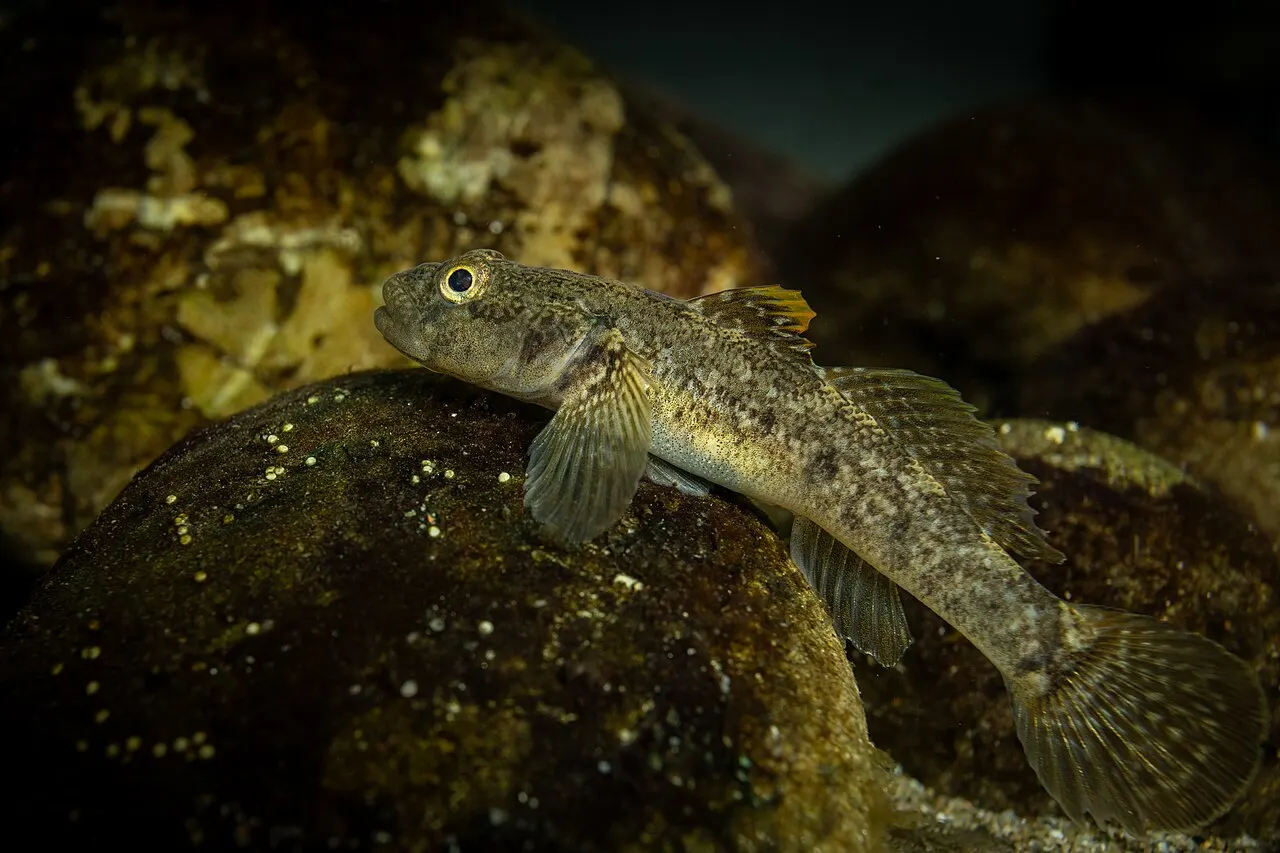
The Arno goby is a small freshwater fish found only in Italy, where it lives in streams with plenty of plant cover along the edges. The IUCN Red List reassessed it as Endangered in 2024, with a decreasing population, citing habitat change, water use and a competing goby introduced to its rivers.
How to recognise it
Males and females differ a lot in size. Males reach about 12.5 cm in total length, while females stop at about 7 cm.
The scientific name is Padogobius nigricans. Older papers sometimes call it Gobius nigricans.
Where it lives
The Red List records it from mainland Italy only, in permanent and seasonal rivers and streams. It tends to stay in well-vegetated edge areas.
A 2016 study in Aquatic Invasions describes it as native to the Tuscany and Latium district of central Italy, limited to six river basins and two lakes on the Tyrrhenian side, with a range under 2,000 square km. The Red List describes it as a non-migrant that gathers in groups all year, and gives a generation length of about two years.
Pins are Wikidata “endemic to” fields. Orange dots, when present, are GBIF occurrence tiles — survey bias included.
Why it is in trouble
The Red List threat list is long. It covers small dams and other changes to river ecosystems, nutrient loads, silt from soil erosion, herbicides and pesticides, sewage, drought, and water taken from rivers and from groundwater for homes, farms and businesses. It also names a competing species, and the assessment records a past population reduction of 50 percent.
That competitor is the Padanian goby, Padogobius bonelli, which lives naturally in northern Italy. It was accidentally introduced to several rivers in central Italy in the early 1980s, along with other fish. In the Tiber basin it was first recorded in 1996, in the Aggia and Cerfone rivers, and it has since spread through the upper and middle Tiber.
The two gobies are small bottom-dwellers that share the same niche. In laboratory trials the Padanian goby consistently won the contest for breeding sites, which stopped the Arno goby from reproducing. Because they eat similar food, competition for food may also matter where supplies are limited.
What the field evidence shows
In the Aggia River, a weir keeps the invader out of the upstream stretch. The 2016 Aquatic Invasions study caught 780 Arno gobies, 547 above the weir and 233 below it. Females below the weir laid more eggs than females above it.
Yet juveniles turned up above the weir, while below it almost no young fish were found in the months after breeding. The researchers read this as a sign that the native goby struggles to reproduce alongside the invader, and called it a serious concern for the species.
What is being done
The Red List records no recovery plan and no systematic monitoring scheme, and no control of the invasive goby. It does note that the species occurs in at least one protected area and is covered by international legislation. The same 2016 study lists it in Annex II of the EU Habitats Directive.
The 2024 assessment gives Endangered under criterion A2ace, a population decline linked to habitat quality and to the effects of an introduced competitor. In 2006 it had been rated Vulnerable.
Sources
Written for this catalog in our own words from the sources below, checked against them on 12 November 2026. Population figures are estimates and carry the year they were made. Status and assessment year: IUCN. 2026. The IUCN Red List of Threatened Species. Version 2026-1. iucnredlist.org.




