Endangered
Archachatina bicarinata
Archachatina bicarinata
The Obô giant snail (Archachatina bicarinata) is a very large, left-coiling forest snail found only on the islands of São Tomé and Príncipe, off West Africa. The IUCN Red List moved it to Endangered in 2022. Surveys show a steep fall in numbers on Príncipe since the 1990s.
How to recognise it
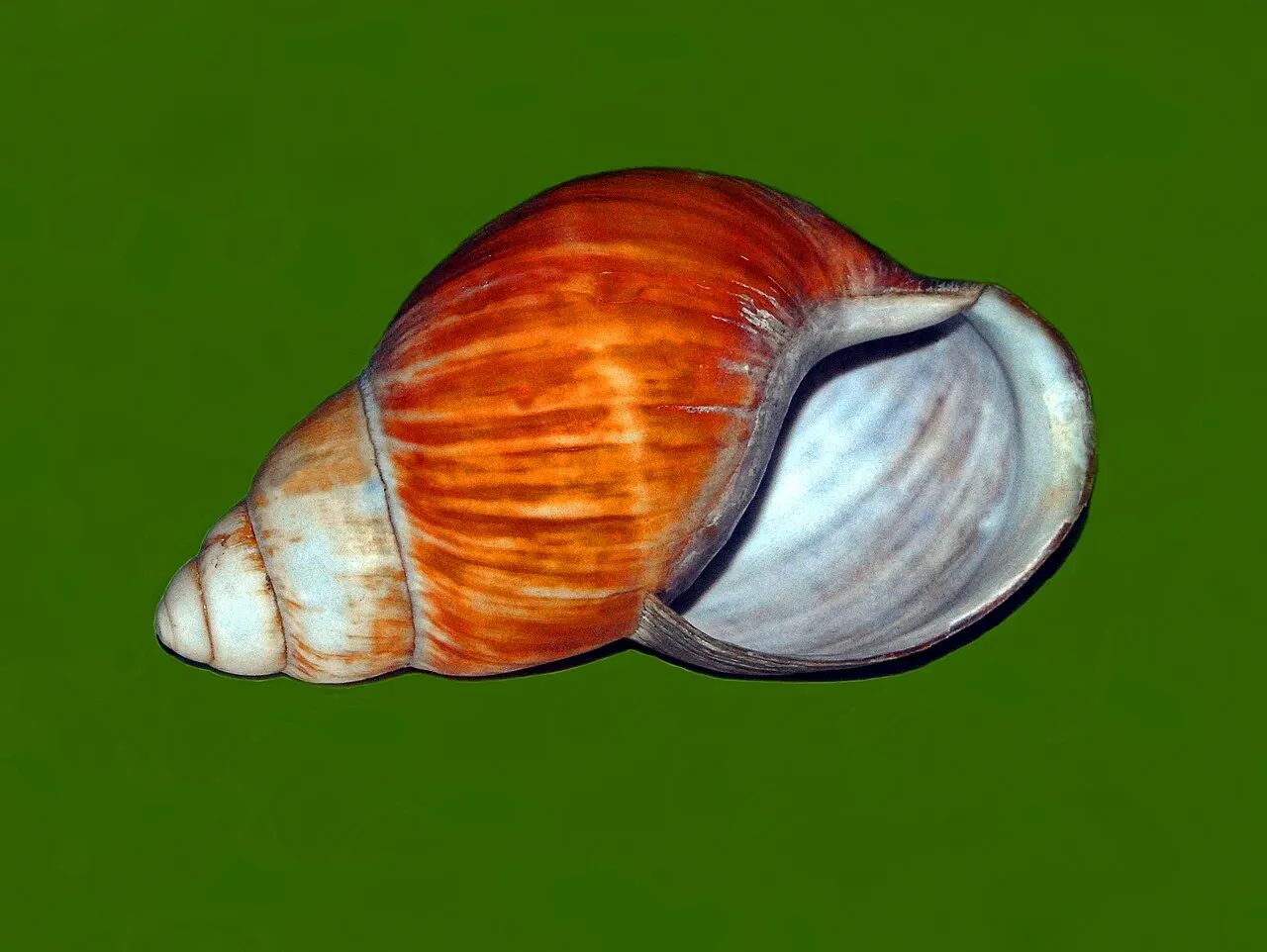
This is a big snail, with a shell reaching roughly 11.7 to 13.5 cm in length. The shell coils the opposite way to most snails (sinistral), which is why an older name for the species was sinistrorsa.
The coiling is a quick way to tell it from the introduced West African giant snail (Archachatina marginata), which coils the usual way.
Where it lives
It is endemic to São Tomé and Príncipe in the Gulf of Guinea. Records span elevations from 24 to 1,266 m, and it lives in moist primary forest. On Príncipe it was once found across much of the island but now survives mainly in protected forest in the south, an area of about 46 square kilometres.
The IUCN estimates its area of occupancy at 196 square kilometres across the two islands, in only two to four locations. That figure covers both islands, so it is larger than the Príncipe-only number.
Pins are Wikidata “endemic to” fields. Orange dots, when present, are GBIF occurrence tiles — survey bias included.
Why it is in trouble
A survey of 13 forest sites on Príncipe in late 2007 found 45 live snails along 85 transects, all in primary forest and more of them far from settlements. A guide described snails that had been so common at one peak in 2002 they were "like stones". At one harvesting site, a single midden held about 515 shells.
People have long collected it for food and for traditional medicine, and collectors prefer it to the introduced snail for its size and flavour. Villagers once took about 450 a month, but now take only 30 to 40, because the snails are scarce and hard to reach. Surveys from June 2018 to September 2019 recorded only 119 live snails. Researchers concluded that the Príncipe population dropped by more than 75 percent in about 20 years, with its range down by roughly 40 percent.
The West African giant snail was introduced in the 1980s and spread through the inhabited north. It lives in farmland rather than forest, and the 2007 survey could not say how it affects the native snail. Researchers have since suggested competition, or a disease carried by the newcomer, may have played a part. Neither has been proven. The IUCN also lists shifting agriculture and habitat change as threats.
What is being done
Most of the remaining snails live inside Parque Natural do Príncipe, which serves as a refuge. The 2007 survey urged bans on collecting in protected areas and on commercial sale, with subsistence collection limited to larger animals. In October 2019, workshops on both islands began work on a formal conservation action plan.
The IUCN's 2022 assessment records an action plan, systematic monitoring, awareness work and captive breeding as in place.
Sources
Written for this catalog in our own words from the sources below, checked against them on 12 November 2026. Population figures are estimates and carry the year they were made. Status and assessment year: IUCN. 2026. The IUCN Red List of Threatened Species. Version 2026-1. iucnredlist.org.




