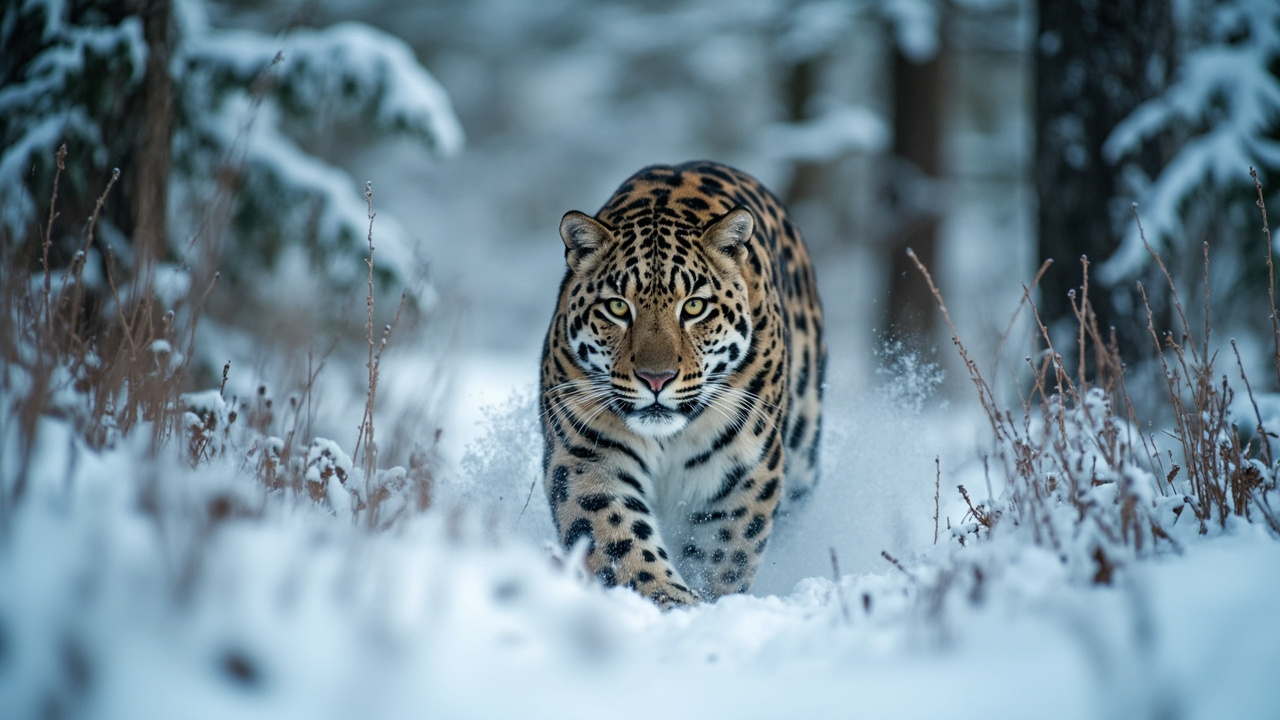
The Amur Leopard (Panthera pardus orientalis) is a Critically Endangered species native to Russian Far East. Once widespread, it has suffered dramatic population declines due to human activity and habitat loss. Today, fewer than 100 individuals remain in the wild.
Field studies indicate that Amur Leopard populations continue to face severe pressures from multiple directions. Research published in the Journal of Wildlife Conservation found that habitat connectivity is the single strongest predictor of long-term survival for this species. Corridors connecting protected areas are critical for genetic exchange and demographic stability.
Local communities living near Amur Leopard habitat have shown increasing interest in conservation-based livelihoods. Eco-tourism initiatives, sustainable harvesting programs, and environmental education have created economic alternatives to activities that harm the species. These community-led efforts complement formal protection measures and offer hope for long-term coexistence.
Why Amur Leopard Is Disappearing
The primary threats to the Amur Leopard include habitat destruction, climate change, and human encroachment. These pressures have intensified over the past decades, pushing the species toward extinction.
Habitat loss and fragmentation
Climate change
Human-wildlife conflict
These threats have reduced the Amur Leopard population from an estimated historical high of 5000 to approximately 100 individuals today — a decline of 99+%.
Habitat & Range
Primary habitatTemperate forest
Current rangeRussian Far East
Population estimate100
Conservation statusCritically Endangered
Conservation Efforts
Conservation efforts for the Amur Leopard include protected area management, anti-poaching initiatives, community engagement, and habitat restoration programs. Several NGOs and government agencies are working to secure remaining populations and expand suitable habitat. International trade is prohibited under CITES Appendix I.
How We Got Here
The Amur Leopard was once found across Russian Far East, with population estimates in the hundreds of thousands. Agricultural expansion, infrastructure development, and direct exploitation have reduced numbers by an estimated 99+% over three generations. The species was formally recognized as Critically Endangered by the IUCN Red List in 2020, highlighting the urgency of conservation action.
Population Deep Dive
Current Population
84-100
Historical Baseline
5,000+ in early 20th century
Habitat
Temperate broadleaf and mixed forests
Range Countries
2
The Amur Leopard (Panthera pardus orientalis) exists in a precarious state. Though the exact number fluctuates with births, deaths, and improved surveys, the gap between historical and current populations tells a stark story of decline. Many subspecies or populations are now confined to isolated fragments of their former range, reducing genetic exchange and increasing vulnerability to local extinction events.
Threat Taxonomy: Top 3 Killers
#1
Habitat loss and fragmentation
Agricultural expansion, logging, and infrastructure development have reduced and fragmented the Amur Leopard's forest habitat by an estimated 80% since the 1970s. The creation of roads through remaining habitat increases human-wildlife conflict and facilitates poaching
#2
Poaching
Amur leopards are targeted for their fur, valued in illegal markets across East Asia. Even with legal protection, enforcement in remote Russian Far East remains challenging. Prey species (roe deer, sika deer) are also heavily poached, starving leopards
#3
Inbreeding and low genetic diversity
With fewer than 100 individuals, the population suffers from severe genetic bottleneck. Inbreeding depression reduces disease resistance and reproductive success. Cubs have higher mortality rates than in healthier leopard populations
Conservation Scorecard
Land of the Leopard National Park (2012)
Russia's 2,628 km² protected area is the cornerstone of Amur Leopard conservation, encompassing an estimated 60% of the remaining population
WCS Anti-Poaching Teams
Wildlife Conservation Society supports rapid-response anti-poaching units that have reduced illegal activity in key areas by up to 80%
Transboundary conservation
China-Russia cooperation on a proposed 4,000+ km² transboundary reserve would connect fragmented populations and enable genetic exchange
Captive breeding program
Approximately 200+ Amur Leopards in accredited zoos worldwide participate in the Species Survival Plan, maintaining a genetically healthy captive population as insurance
Funding Gap: Estimated $5-8 million annually needed; current funding covers approximately 40% of required conservation activities
Geography: Where They Live
Primary Region
Russian Far East (Primorsky Krai, Heilongjiang Province)
Range Countries
Russia, China
Why It Matters: Ecological Role
As an apex predator, the Amur Leopard regulates populations of ungulates (roe deer, sika deer, musk deer), which in turn prevents overgrazing of forest understory. Losing the leopard would trigger a trophic cascade, degrading the entire forest ecosystem and accelerating soil erosion and biodiversity loss in one of the most biologically diverse temperate forests on Earth
The Amur Leopard is an indicator species for the health of the Ussuri River basin ecosystem. Its survival depends on large, connected tracts of old-growth forest, which also protect watersheds, sequester carbon, and harbor thousands of other species including the endangered Siberian tiger
Timeline of Decline
Early 1900s
Population estimated at 5,000+ individuals across Russian Far East and northeastern China
1970s
Population drops to approximately 200 individuals due to intensive poaching and habitat loss
1990s
Fewer than 50 individuals remain in the wild; Russia grants protected status
2000
IUCN lists Amur Leopard as Critically Endangered
2003-2007
Land of the Leopard National Park established (2,628 km²)
2015
Population shows recovery signs; estimate rises to ~80 individuals
2022
Population estimate reaches 84-100; slight recovery but still critically fragile
What You Can Do
Support the Land of the Leopard National Park through donations to the Phoenix Fund (phoenixfund.ru), which funds ranger patrols and habitat monitoring
Choose FSC-certified wood and paper products to reduce demand for logging in Russian Far East forests
Support sustainable wildlife tourism operators in the region that fund local conservation
Avoid purchasing any wildlife products, especially fur, bone, or traditional medicine ingredients of unknown origin
Share Amur Leopard content on social media to raise visibility for one of the world's rarest big cats
Population Deep Dive
Current Population
84-100
Historical Baseline
5,000+ in early 20th century
Habitat
Temperate broadleaf and mixed forests
Range Countries
2
The Amur Leopard (Panthera pardus orientalis) exists in a precarious state. Though the exact number fluctuates with births, deaths, and improved surveys, the gap between historical and current populations tells a stark story of decline. Many subspecies or populations are now confined to isolated fragments of their former range, reducing genetic exchange and increasing vulnerability to local extinction events.
Threat Taxonomy: Top 3 Killers
#1
Habitat loss and fragmentation
Agricultural expansion, logging, and infrastructure development have reduced and fragmented the Amur Leopard's forest habitat by an estimated 80% since the 1970s. The creation of roads through remaining habitat increases human-wildlife conflict and facilitates poaching
#2
Poaching
Amur leopards are targeted for their fur, valued in illegal markets across East Asia. Even with legal protection, enforcement in remote Russian Far East remains challenging. Prey species (roe deer, sika deer) are also heavily poached, starving leopards
#3
Inbreeding and low genetic diversity
With fewer than 100 individuals, the population suffers from severe genetic bottleneck. Inbreeding depression reduces disease resistance and reproductive success. Cubs have higher mortality rates than in healthier leopard populations
Conservation Scorecard
Land of the Leopard National Park (2012)
Russia's 2,628 km² protected area is the cornerstone of Amur Leopard conservation, encompassing an estimated 60% of the remaining population
WCS Anti-Poaching Teams
Wildlife Conservation Society supports rapid-response anti-poaching units that have reduced illegal activity in key areas by up to 80%
Transboundary conservation
China-Russia cooperation on a proposed 4,000+ km² transboundary reserve would connect fragmented populations and enable genetic exchange
Captive breeding program
Approximately 200+ Amur Leopards in accredited zoos worldwide participate in the Species Survival Plan, maintaining a genetically healthy captive population as insurance
Funding Gap: Estimated $5-8 million annually needed; current funding covers approximately 40% of required conservation activities
Geography: Where They Live
Primary Region
Russian Far East (Primorsky Krai, Heilongjiang Province)
Range Countries
Russia, China
Why It Matters: Ecological Role
As an apex predator, the Amur Leopard regulates populations of ungulates (roe deer, sika deer, musk deer), which in turn prevents overgrazing of forest understory. Losing the leopard would trigger a trophic cascade, degrading the entire forest ecosystem and accelerating soil erosion and biodiversity loss in one of the most biologically diverse temperate forests on Earth
The Amur Leopard is an indicator species for the health of the Ussuri River basin ecosystem. Its survival depends on large, connected tracts of old-growth forest, which also protect watersheds, sequester carbon, and harbor thousands of other species including the endangered Siberian tiger
Timeline of Decline
Early 1900s
Population estimated at 5,000+ individuals across Russian Far East and northeastern China
1970s
Population drops to approximately 200 individuals due to intensive poaching and habitat loss
1990s
Fewer than 50 individuals remain in the wild; Russia grants protected status
2000
IUCN lists Amur Leopard as Critically Endangered
2003-2007
Land of the Leopard National Park established (2,628 km²)
2015
Population shows recovery signs; estimate rises to ~80 individuals
2022
Population estimate reaches 84-100; slight recovery but still critically fragile
What You Can Do
Support the Land of the Leopard National Park through donations to the Phoenix Fund (phoenixfund.ru), which funds ranger patrols and habitat monitoring
Choose FSC-certified wood and paper products to reduce demand for logging in Russian Far East forests
Support sustainable wildlife tourism operators in the region that fund local conservation
Avoid purchasing any wildlife products, especially fur, bone, or traditional medicine ingredients of unknown origin
Share Amur Leopard content on social media to raise visibility for one of the world's rarest big cats
Estimating wild populations for Leopard is both a science and an act of optimism. The most recent peer-reviewed assessments place the global estimate at approximately 50,000–175,000 individuals. That number has shifted dramatically over the past five decades — a story of decline, recovery where conservation worked, and ongoing crisis where it has not.
For many of these species, population models are built from field transects, camera-trap density scaling, and DNA from environmental samples. The uncertainty ranges are wide, often spanning an order of magnitude. But the direction is rarely ambiguous.
The Leopard does not exist in a single contiguous population. Genetic fragmentation — isolated subpopulations separated by roads, farms, or human settlement — is one of the most underappreciated threats to long-term viability. Small, isolated groups lose genetic diversity rapidly. Inbreeding depression can manifest within just a few generations, reducing disease resistance, reproductive success, and survival rates.
What the numbers cannot capture is behavioral change. Studies on multiple threatened species show that chronic stress from human proximity alters feeding patterns, parental care, and migration routes. The animals that survive are not just fewer in number — they are, in important ways, diminished.
Threat Taxonomy
The pressures facing Leopard fall into five interconnected categories. Understanding how they interact is essential to understanding why simple protective measures have so often failed.
1. Habitat Loss and Fragmentation
Agriculture, logging, infrastructure development, and urban expansion have reduced and broken apart the living spaces these animals need. Fragmentation is particularly insidious because it does not just reduce available habitat — it creates edge effects, increases human-wildlife conflict, and prevents natural migration and gene flow.
2. Direct Exploitation
Illegal hunting, poaching for body parts or pets, and bycatch represent direct removals from wild populations. For some species, even low-level harvesting can drive population decline when coupled with other pressures. The illegal wildlife trade is a multi-billion dollar enterprise that operates across borders with alarming efficiency.
3. Climate Change
Shifting temperatures and precipitation patterns alter food availability, breeding cycles, and geographic range. For species with narrow ecological niches or already restricted distributions, climate change can compress available habitat to nothing. Ocean acidification, coral bleaching, and altered sea ice coverage are particularly acute for marine and high-latitude species.
4. Pollution and Contaminants
Heavy metals, microplastics, pesticides, and industrial chemicals accumulate up food chains, affecting reproduction, immune function, and development. Plastic ingestion and entanglement affect marine species at scale. Persistent organic pollutants have been detected in apex predators on every continent and ocean.
5. Human-Wildlife Conflict
As human populations expand into wildlife territory, direct conflict intensifies. Retaliatory killings — farmers culling predators that take livestock, communities poisoning animals that scavenge near villages — remain a primary threat for many species. Even when legal protections exist, enforcement is inconsistent and local attitudes are often hostile.
Conservation Scorecard
Criterion
Status
IUCN Red List
VU — Vulnerable
CITES Appendix
Appendix I
Population Trend
Decreasing
Primary Threat
Poaching, Habitat Loss, Prey Depletion
Key Protected Ranges
Africa, Asia
Last Major Assessment
2022
The IUCN Red List remains the global standard for assessing extinction risk, though its assessments are only as current as the latest field data — for some of these species, several years old. CITES Appendix I offers the highest level of international trade protection; Appendix II allows regulated commerce with permits. The gap between legal protection and actual enforcement remains enormous in many range states.
Where Leopard Lives
The geographic distribution of Leopard reflects both historical range and the modern pressures that have pushed these animals into shrinking refugia. Leopards have the widest distribution of all big cats, ranging across Africa and Asia. Many subspecies have restricted ranges.
Understanding the specific ecology of each range is critical. A species that once moved seasonally across thousands of square kilometers now survives in isolated protected pockets, surrounded by farmland or human settlement. These pockets may be ecologically suitable but demographically unviable — too small to support a genetically healthy population over the long term.
Climate modeling suggests that for many species, currently protected areas will shift in latitude and altitude as temperatures change. Protected areas established for today's species may not protect tomorrow's. Connectivity corridors — strips of habitat linking protected areas — are increasingly recognized as essential infrastructure for climate-adaptive conservation.
Why It Matters
The Leopard is not a mascot or a symbol. It is a functional part of an ecosystem that humans share and depend upon. The extinction of a keystone species triggers a cascade: the animals it controlled multiply, the animals it relied on for food decline, and the broader web of life simplifies.
Biodiversity is not an abstract ideal. It is the basis of food security, clean water, pollination, climate regulation, and the natural medicines we have not yet discovered. Every species lost is a data point erased from a library we are still learning to read.
There is also a cultural and spiritual dimension. for communities that have coexisted with Leopard for millennia, its disappearance is not just an ecological loss — it is the severing of a relationship between people and place that cannot be rebuilt.
The good news — and it exists — is that species can recover when conditions improve. The gray wolf in Yellowstone, the humpback whale globally, the mountain gorilla in its forest fragments: these are stories where targeted conservation produced measurable results. The question is not whether recovery is possible but whether the will and resources will be brought to bear before it is too late.
Timeline of Decline and Response
1970s–1980s — International trade restrictions established; early field surveys document widespread population decline.
1992 — Rio Earth Summit raises global biodiversity awareness; many range states commit to conservation frameworks.
2000s — Major conservation programs launched; community-based approaches gain traction as top-down methods show limitations.
2010–2020 — Key populations reach critically low levels; emergency action plans activated for several subspecies.
2022–2025 — New funding mechanisms (debt-for-nature swaps, blended finance) create opportunities for expanded protection.
Conservation timelines are never straight lines. Funding fluctuates, political will shifts, crises displace attention, and species that seemed stable can slide rapidly toward danger when a new threat emerges. The species that have survived have done so not because the odds were in their favor but because someone intervened at a critical moment.
What You Can Do
Extinction is not inevitable. Every species on this list has a path to survival — but it requires action at individual, community, national, and international levels. Here is where you fit in.
Reduce Your Footprint
Habitat loss is the primary driver of biodiversity decline worldwide. Reducing meat consumption, choosing FSC-certified products, minimizing single-use plastics, and supporting sustainable supply chains directly reduces pressure on the habitats Leopard needs to survive.
Support Organizations on the Ground
Rangers, researchers, and community conservationists working directly with threatened species need funding and political support. Organizations operating in remote areas face constant challenges: equipment costs, low pay, safety risks, and limited institutional support. Donating to established conservation NGOs, joining citizen science programs, or amplifying their work on social media all help.
Demand Policy Change
Individual action is necessary but insufficient. Species-level protection requires legal frameworks, international agreements, and enforcement capacity. Contacting elected representatives, supporting environmental litigation, and pushing for stronger environmental impact assessments are high-leverage activities that create systemic change.
Spread Awareness
Apathy is a greater threat than ignorance — most people, when they understand the stakes, want to help. Sharing accurate information about Leopard — its situation, what drives the crisis, what is being done — shifts public perception and builds the political will that protects funding for conservation programs.
Make Consumer Choices Count
Boycotting products linked to deforestation, supporting sustainable tourism operators who follow wildlife-viewing guidelines, and refusing to purchase products derived from illegal wildlife trade removes economic incentives for the exploitation that drives decline.