Endangered
Amphinotus nymphula
Amphinotus nymphula
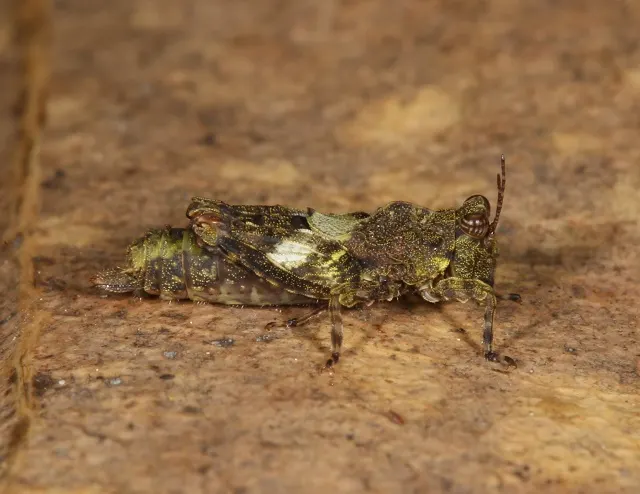
Amphinotus nymphula is a small groundhopper found only in the Seychelles, an island group in the western Indian Ocean. It lives in damp forest, in leaf litter and on mossy trees. Its range is tiny, and the IUCN Red List has rated it Endangered since its 2012 assessment.
What it is
This is a pygmy grasshopper, or groundhopper, in the family Tetrigidae. It was first described in 1912 by Bolivar, from material collected in the Seychelles, under the name Ocytettix nymphula.
Its genus has changed more than once. The Red List and many databases use Amphinotus, but a 2025 revision of the pygmy grasshoppers in Zootaxa placed it in a new genus, Storozhenkoium, and the Orthoptera Species File now lists it as Storozhenkoium nymphula. Both names refer to the same valid species.
Where it lives
The species is endemic to the Seychelles. The Red List assessment records it from two locations at roughly 500 to 900 metres above sea level. It puts the area the insect actually occupies at about 10 square kilometres, within an overall range of around 300 square kilometres, and records that the species occurs in at least one protected area.
Its main habitat is reported to be leaf litter and moss on trees in cloud forest. The Red List files its habitat under moist lowland forest, which fits the elevation range less neatly, so the exact forest type is worth treating loosely. GBIF holds a single observation, made on Mahe, the main island, in 2014.
Pins are Wikidata “endemic to” fields. Orange dots, when present, are GBIF occurrence tiles — survey bias included.
Why it is in trouble
A range this small leaves little margin. The Red List lists habitat change, drought, and invasive plants and other introduced species among the pressures, and records a continuing decline in the area, extent and quality of suitable habitat.
A 2016 study by Kolwelter and Ewen of the islands' groundhoppers reportedly found females more often near the invasive shrub Clidemia hirta than males. The suggested explanation is that the shrub changes shade and humidity, but that remains a hypothesis rather than a measured effect.
The population trend has never been established. There is no population estimate, and at the time of the assessment there was no monitoring scheme, no recovery plan and no captive breeding. Its relatives are in similar trouble. The Mohamed bin Zayed Species Conservation Fund notes that the four groundhopper species endemic to the Seychelles are all threatened, and two are Critically Endangered. A 2013 search of Mahe's cloud forests, led by two Trier University students, did not find either of those two.
Sources
Written for this catalog in our own words from the sources below, checked against them on 12 November 2026. Population figures are estimates and carry the year they were made. Status and assessment year: IUCN. 2026. The IUCN Red List of Threatened Species. Version 2026-1. iucnredlist.org.




