Endangered
African bush elephant
Loxodonta africana
African bush elephant is a mammal in the family Elephantidae (order Proboscidea) — Loxodonta africana, recorded as Endangered.
Appearance
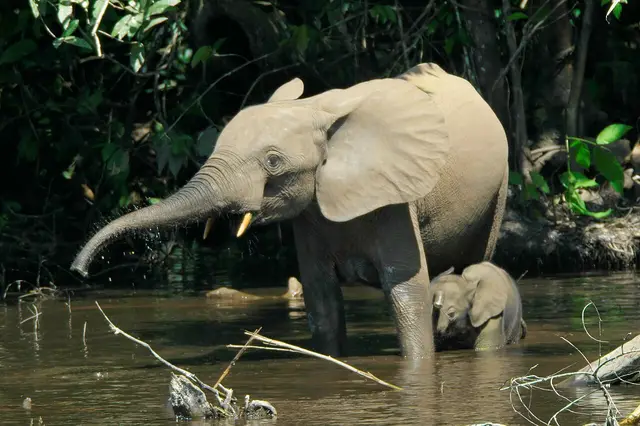
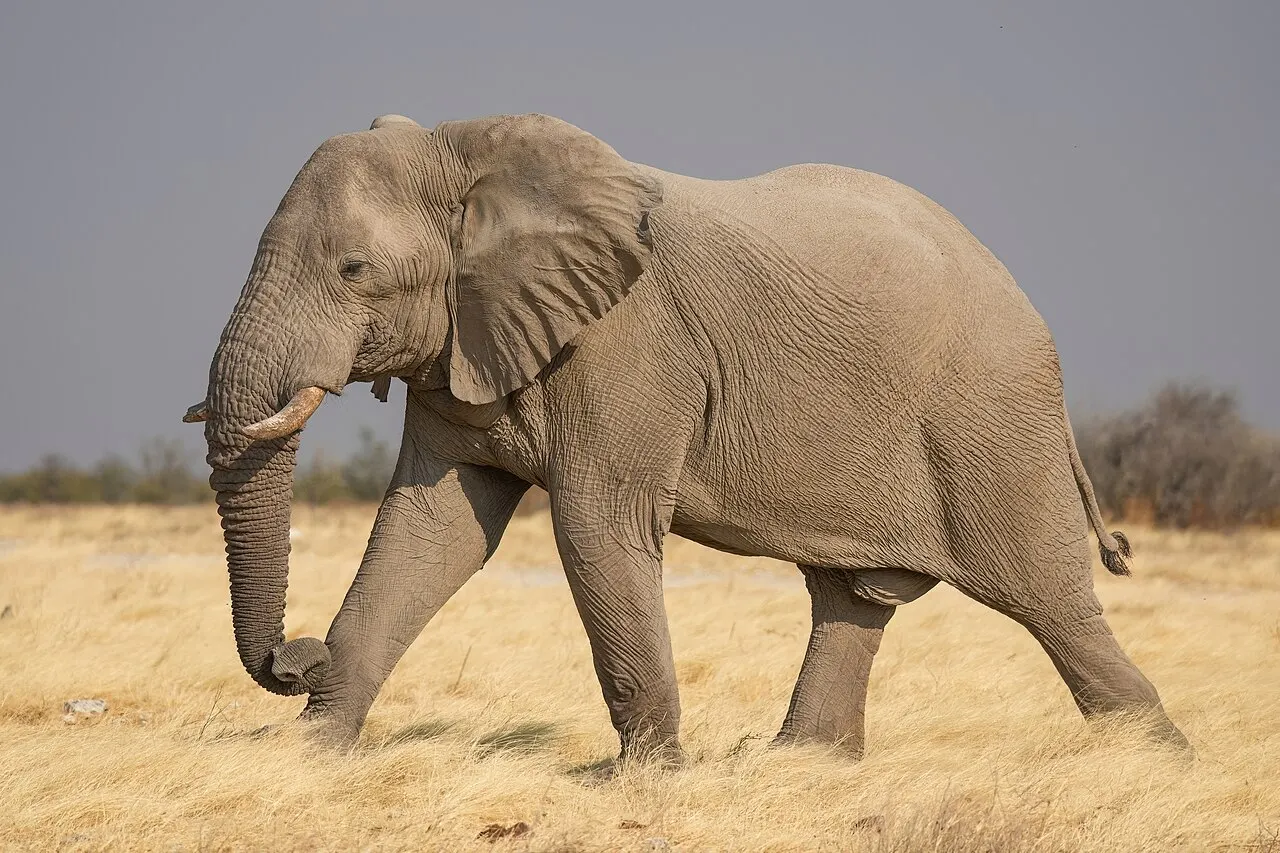
The African bush elephant has grey skin with scanty hairs. Its skin is grey with scanty hairs, and bending cracks that support thermoregulation by retaining water.
The average adult consumes about 150 kg (330 lb) of vegetation and 230 L (51 imp gal. 61 US gal) of water each day.
Range and habitat
The African bush elephant occurs in sub-Saharan Africa that includes Uganda, Kenya, Tanzania, Botswana, Zimbabwe, Namibia, Zambia, Angola, Malawi, Mali, Rwanda, Mozambique and South Africa. It moves between a variety of habitats, among them subtropical and temperate forests, dry and seasonally flooded grasslands, woodlands, wetlands, and agricultural land from sea level to mountain slopes. In Mali and Namibia, it also inhabits desert and semi-desert areas.
Pins are Wikidata “endemic to” fields. Orange dots, when present, are GBIF occurrence tiles — survey bias included.
Diet and breeding
The African bush elephant is herbivorous. African bush elephants mate during the rainy season.
It is a mixed herbivore feeding mostly on grasses, creepers, herbs, leaves, and bark.
In crisis
Since 2021, the African bush elephant has been listed as Endangered on the IUCN Red List. It is threatened foremost by habitat destruction, and in parts of its range also by poaching for meat and ivory. Chad is a major transit country for smuggling of ivory in West Africa, though this trend was curtailed by raising penalties for poaching and improving law enforcement.
Poaching of the elephant in the 1970–1980s were considered the largest killings in history. The African bush elephant is threatened primarily by habitat loss and fragmentation following conversion of natural habitat for livestock farming, plantations of non-timber crops, and building of urban and industrial areas.
CITES lists this taxon on Appendix II. Confirm the current appendix on the CITES checklist.
African bush elephant is Endangered on the IUCN Red List (assessed 2022, criteria A2bd). Confirm the official criteria and any later count on the assessment page.
Sources
Adapted from the English Wikipedia article on African bush elephant (CC BY-SA 4.0; authors are listed in the article history; changes were made), Wikidata item Q36557. Family and order context is original field-guide writing about the group, not a copied assessment of this one species. Not an IUCN assessment. Counts, when quoted, can change — confirm them on the recovery programme and on iucnredlist.org. Status and assessment year: IUCN. 2026. The IUCN Red List of Threatened Species. Version 2026-1. iucnredlist.org.