Endangered
Plebecula giramica
Actinella giramica
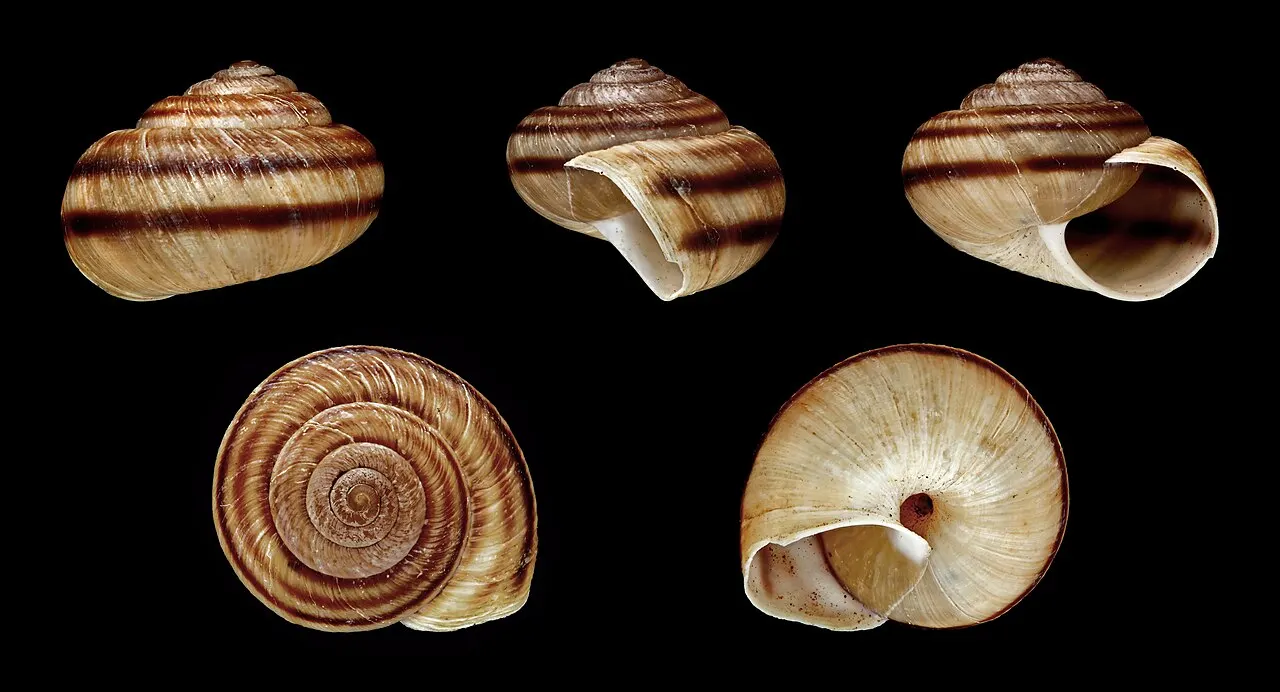
Plebecula giramica, listed on many older checklists as Actinella giramica, is a small land snail found only on the Portuguese island of Madeira. It lives in a tiny area of forest and grassland, and the IUCN Red List rated it Endangered in its 2025 assessment.
Where it lives
This snail belongs to the Geomitridae, a large family of land snails that has diversified spectacularly on the Atlantic islands. It is endemic to Madeira, meaning it occurs nowhere else.
The 2025 assessment puts both its extent of occurrence and its area of occupancy at 12 square kilometres. That is the whole known range, spread over just three locations. It has been recorded between about 350 and 450 metres above sea level, in temperate forest and temperate grassland.
Pins are Wikidata “endemic to” fields. Orange dots, when present, are GBIF occurrence tiles — survey bias included.
A name with a history
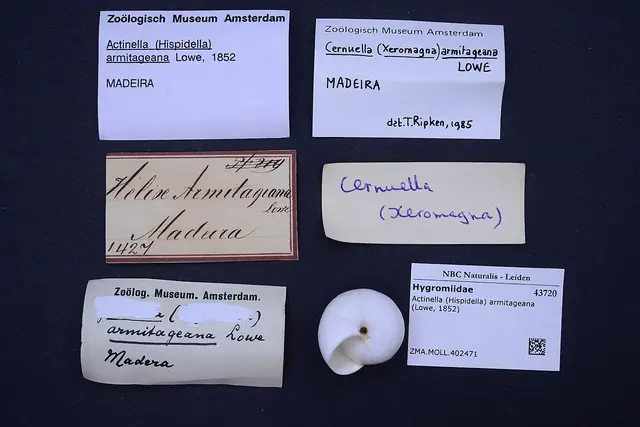
Richard Thomas Lowe described the species in 1852 as Helix (Plebecula) giramica. It was later placed in Actinella, which is why the older name still turns up in books and databases. Current taxonomic lists treat Plebecula as the valid genus, which holds two other living species and one extinct one.
Why it is in trouble
The assessment records a continuing decline in the area the snail occupies and in the number of locations. Housing and urban development is the heaviest listed threat, affecting between half and nine tenths of the population and rated as causing very rapid declines. Tourism and recreation areas, landslides and avalanches each affect a smaller share, and drought is listed as acting on the whole population, with its effect unknown.
Population size has never been estimated, and the trend is recorded as unknown. Earlier assessments rated the species Vulnerable, so the 2025 listing is a step up in concern.
What is being done
A systematic monitoring scheme is in place, and site and area management is the one conservation action listed. None of the population is recorded inside a protected area. The assessment names taxonomy, population size and distribution, and habitat trends as research priorities.
Sources
Written for this catalog in our own words from the sources below, checked against them on 12 November 2026. Population figures are estimates and carry the year they were made. Status and assessment year: IUCN. 2026. The IUCN Red List of Threatened Species. Version 2026-1. iucnredlist.org.