Endangered
Achondrostoma salmantinum
Achondrostoma salmantinum
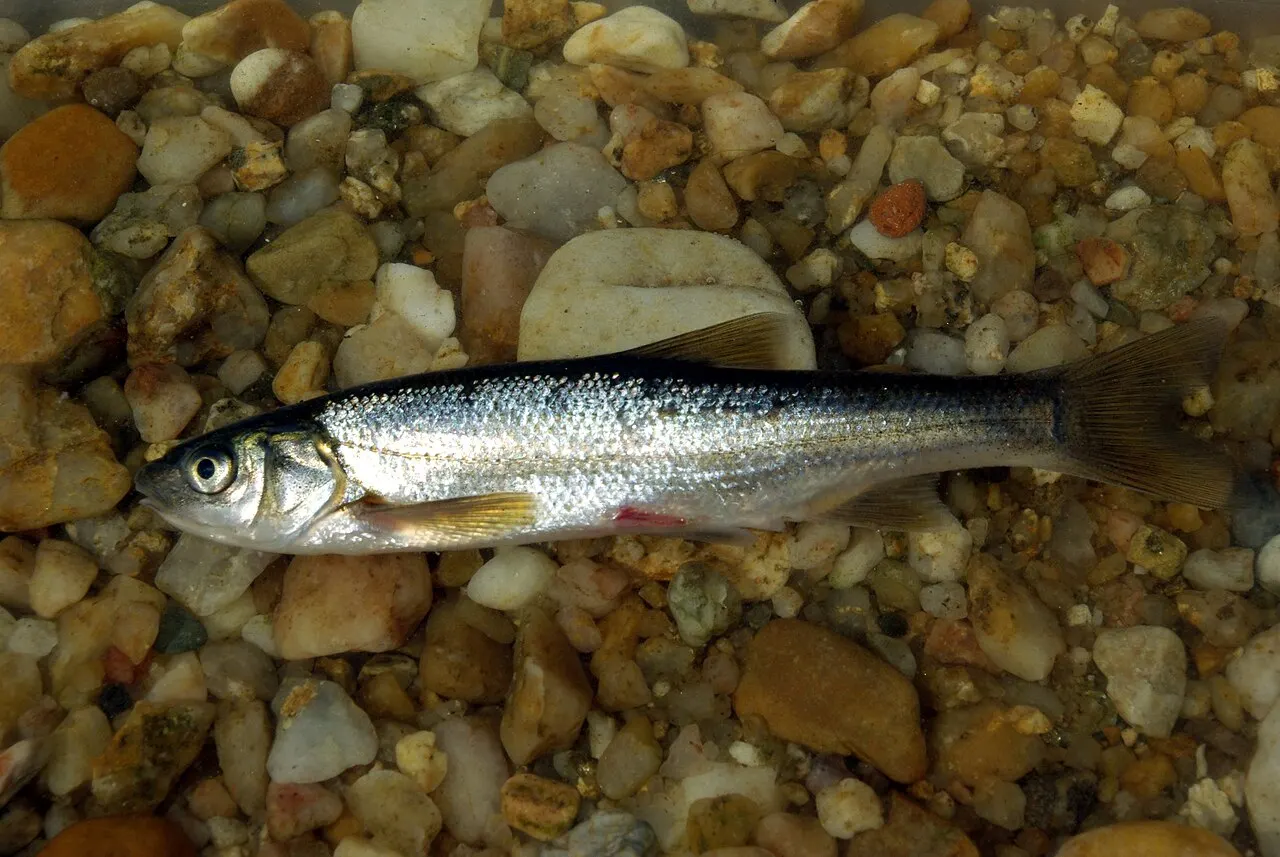
The sarda (Achondrostoma salmantinum) is a small minnow found only in a handful of streams in the Duero basin around Salamanca, in western Spain. The IUCN Red List classed it as Endangered in its 2024 assessment. Adults stay under 9 cm long, and the species was only described in 2007.
How to recognise it
The sarda is a slim, streamlined little fish with a narrow tail stalk. It stays small. Males reach about 6.8 cm and females about 8.1 cm at most, so even the biggest individuals fit comfortably in the palm of a hand.
Telling it from its close relatives takes a hand lens or a fish specialist. Its lateral line carries 44 to 53 scales, and the dorsal and anal fins each have 2 or 3 hard spines with 6 or 7 soft rays. The mouth lacks the horny plate found in the genus Chondrostoma, which is where the genus name Achondrostoma (roughly 'without' that mouth plate) comes from.
Where it lives
The sarda is endemic to the Duero (Douro) river system in the province of Salamanca. Fish records come from the Huebra, Turones, Uces and Águeda systems and their tributaries, and the original specimens were collected in the Huebra at San Muñoz. The 2024 Red List assessment lists it as present in Spain and possibly present in Portugal, where it has not been firmly confirmed.
It favours slow, low-lying streams and rivers with plenty of aquatic plants and a bed of sand or gravel. Some of these streams are seasonal, and the Red List habitat records cover both permanent and seasonal or intermittent watercourses.
Pins are Wikidata “endemic to” fields. Orange dots, when present, are GBIF occurrence tiles — survey bias included.
How it lives
Very little has been published on its daily life. FishBase describes it as a benthopelagic fish that moves within river systems, living in clear, sandy-bottomed seasonal streams, and the Red List records it as gathering in groups all year. A 2021 study in Conservation Genetics, using mitochondrial DNA and SNP markers, found high genetic differentiation between populations.
Why it is in trouble
The Red List places it in the Endangered category because its range is small, its populations are severely fragmented and the area it occupies is still shrinking. The population trend is recorded as unknown, and no overall population count exists.
The threats listed are small dams and weirs, drought, small-scale grazing and farming, extra nutrients washing in, and soil erosion and silt. The assessment also lists several named species as an ongoing pressure.
What is being done
The sarda was one of six native fishes targeted by LIFE CIPRÍBER, an EU-funded project that ran from June 2014 to December 2019 in the Duero and Tagus basins. Across all its target species, the project overcame 57 river obstacles, restored connectivity along 351 km of river, and released 3,221 captive-bred fish. Its captive breeding used the Galisancho ichthyological centre.
The Red List records that a recovery plan exists, that conservation sites have been identified over part of the range and that the species occurs in at least one protected area. It also records that no systematic monitoring scheme is in place.
Sources
Written for this catalog in our own words from the sources below, checked against them on 12 November 2026. Population figures are estimates and carry the year they were made. Status and assessment year: IUCN. 2026. The IUCN Red List of Threatened Species. Version 2026-1. iucnredlist.org.




