Endangered
Acadian redfish
Sebastes fasciatus
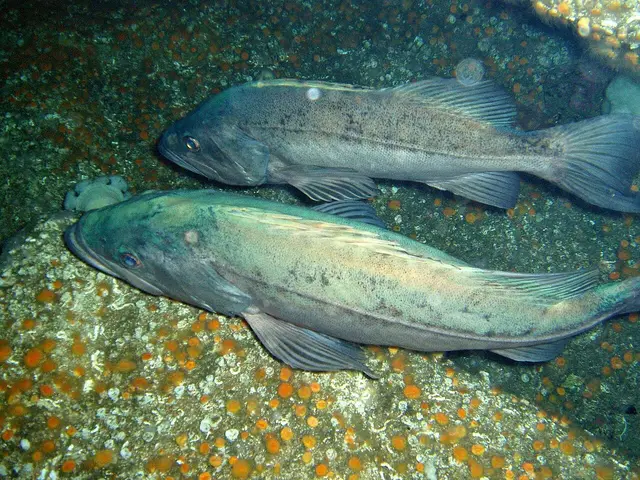
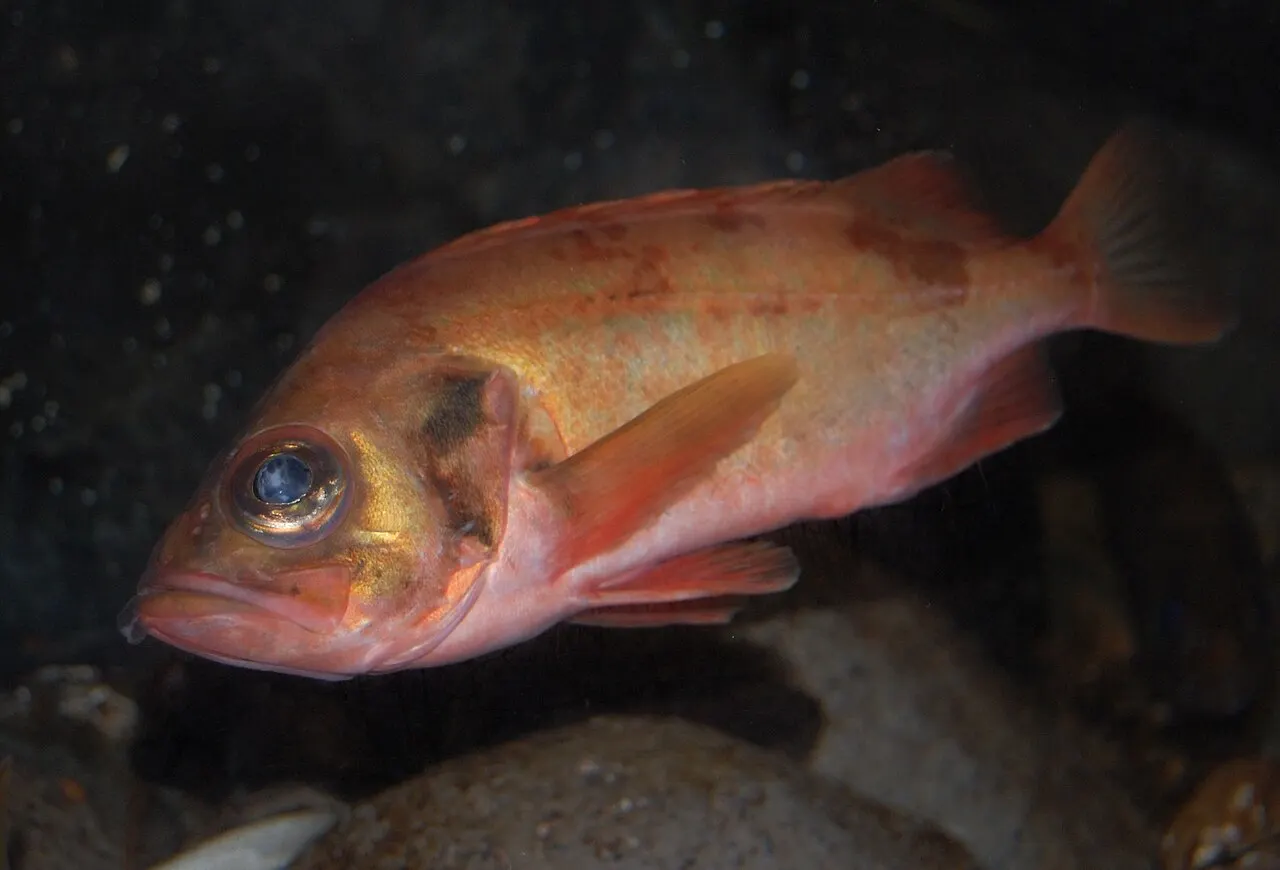
The Acadian redfish (Sebastes fasciatus) is a long-lived, red-orange rockfish of the cold northwest Atlantic that gives birth to live young. The IUCN Red List still lists it as Endangered, on a 1996 assessment, but US and Canadian stocks have since followed quite different paths.
How to recognise it
It's a reddish-orange fish that grows to about 50 cm (20 inches). Identification is hard in this group. The Acadian redfish looks almost identical to the deepwater redfish (Sebastes mentella), and the two reportedly hybridise. Biologists separate them by counting soft rays in the anal fin, by checking the gas bladder, or, most reliably, by genetic testing.
It's also called the Atlantic redfish, Acadian rockfish or Labrador redfish. David Humphreys Storer described it in 1854 from fish taken at Provincetown, Massachusetts.
Where it lives
It lives only in the western Atlantic, from the Gulf of Maine to the Labrador Sea. The IUCN's range list includes Canada, the United States, Greenland and Iceland. Canadian scientists note that the Acadian redfish dominates in the south, found almost alone in the Gulf of Maine and on the Scotian Shelf, while the deepwater redfish is more abundant in the north.
Acadian redfish usually sit at 150 to 300 m, shallower than deepwater redfish (generally 350 to 500 m), though the ranges overlap. Another reference gives a wider overall depth span of 70 to 500 m, close to the bottom over clay, silt or rock.
Pins are Wikidata “endemic to” fields. Orange dots, when present, are GBIF occurrence tiles — survey bias included.
How it lives
This is a slow-living fish. It can reach 50 years or more, and Canadian scientists give a maximum age of about 75. US managers give 5 to 6 years as the age at maturity, while Canada's committee puts the generation time of the Atlantic population at about 16 to 18 years. It eats crustaceans, molluscs and smaller fish.
Females carry the young internally and release fully formed larvae. Canadian scientists put the number per female at about 1,500 to 107,000, depending on body size. In unexploited or lightly fished populations, strong year-classes appear only every 5 to 12 years.
Why it is in trouble
The IUCN listing dates from 1996, under criterion A1bd, which rests on an observed population reduction judged by an abundance index and by levels of exploitation. No population trend is recorded in the IUCN data. A slow-growing, late-maturing fish takes a long time to recover from heavy fishing.
In Canada, the national scientific committee (COSEWIC) reviewed the redfish complex in April 2010. It rated the Atlantic population of Acadian redfish Threatened, citing a decline of about 99 percent in mature abundance in the areas where it had been most abundant, over roughly two generations. Some areas have shown stable or rising trends since the 1990s. Directed fishing and bycatch are the main known threats, and shrimp bycatch has fallen since separator grates were introduced.
What is being done
Fishing limits have done most of the work. In US waters, NOAA Fisheries manages redfish under the Northeast multispecies fishery plan, using permits, time and area closures, minimum sizes and annual catch limits, and its 2025 assessment found the stock neither overfished nor subject to overfishing. US commercial landings in 2024 were about 13 million pounds. Canada's separate Bonne Bay population, rated Special Concern in 2010, is closed to directed fishing.
Sources
Written for this catalog in our own words from the sources below, checked against them on 12 November 2026. Population figures are estimates and carry the year they were made. Status and assessment year: IUCN. 2026. The IUCN Red List of Threatened Species. Version 2026-1. iucnredlist.org.