Endangered
Aaadonta fuscozonata
Aaadonta fuscozonata
Aaadonta fuscozonata is a small air-breathing land snail found nowhere except Palau, in the western Pacific. It lives in lowland moist forest on a handful of islands. The IUCN Red List last assessed it as Endangered in 2012, with its occupied area and habitat quality both judged to be shrinking.
What it is
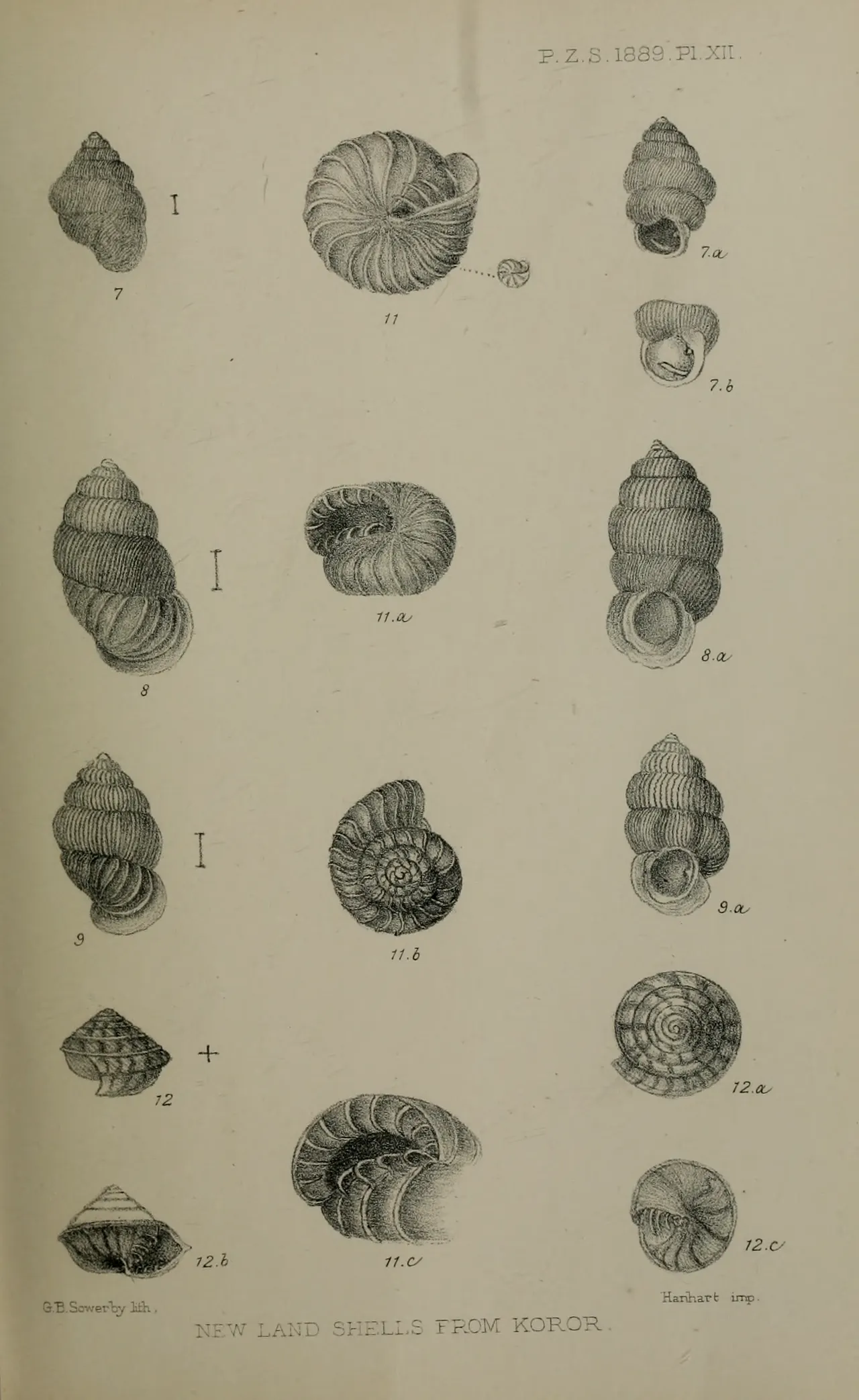
This is a terrestrial pulmonate snail in the family Endodontidae, a group of mostly tiny land snails. Richard Henry Beddome first described it in 1889, as Helix fuscozonata, from specimens collected on Koror. The genus Aaadonta was set up much later, in 1976, by the malacologist Alan Solem, who worked on the endodontid snails of Pacific islands. The name was reportedly chosen so the genus would sort first in alphabetical lists of endodontid genera.
Two forms are recognised. Solem described the second, Aaadonta fuscozonata depressa, in 1976. It is known only from Peleliu, and encyclopedia entries list both forms as Critically Endangered on the IUCN Red List, based on separate 2012 assessments by Rundell.
Where it lives
The species is endemic to Palau. It has been recorded from Koror and Peleliu, from the small island of Ngemelis, and from the northern Rock Islands. The IUCN counts five locations, from about sea level up to 200 m. Its estimated extent of occurrence is only about 20 square kilometres, and the area it actually occupies is estimated at 2 square kilometres.
The only habitat listed is tropical moist lowland forest. Snails in this genus have generally been found under rocks, stones and leaves in primary and secondary forest.
Pins are Wikidata “endemic to” fields. Orange dots, when present, are GBIF occurrence tiles — survey bias included.
Why it is in trouble
Very small ranges leave a species exposed. The 2012 assessment, made under criterion B1ab(ii,iii)+2ab(ii,iii), records a continuing decline in the area occupied and in habitat quality, and lists the overall population trend as decreasing. Destruction and modification of its forest habitat are the stresses named. Past military activity also appears among the threats, but the IUCN marks it as unlikely to return.
Solem suggested that invading ants could be eating the eggs of Aaadonta snails, which would cut numbers while adults survive. That remains a suggestion for the genus, not a measured cause for this species.
What is being done
Little has been recorded. The assessment lists habitat protection and site protection as needed actions, and research on population size, distribution and trends. It records no conservation actions in place, and no captive population is known.
Sources
Written for this catalog in our own words from the sources below, checked against them on 12 November 2026. Population figures are estimates and carry the year they were made. Status and assessment year: IUCN. 2026. The IUCN Red List of Threatened Species. Version 2026-1. iucnredlist.org.




