Canada
1 catalog pin
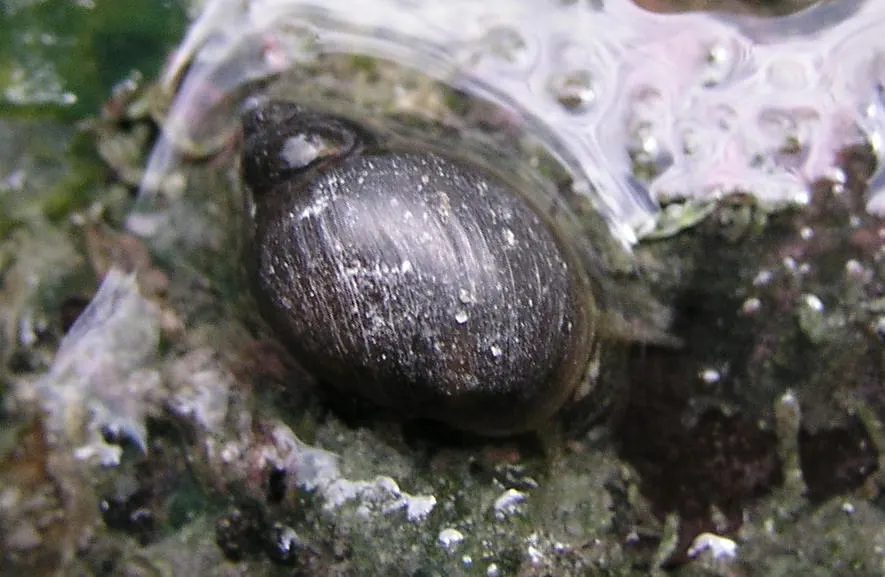
1 animals in this catalog carry a structured country pin for Canada. That is a filing fact, not a claim that the crisis is only here.
The photograph is one of those animals: Banff Springs snail. Open a dossier for the text, the status, and the map. Use the world map to jump to another country. Confirm official distributions on the Red List.
Canada covers about 9.98 million sq km, according to the CBD profile, with three oceans and 243,000 km of coastline. Roughly 40% of the land is forest and woodland, and wetlands cover about 14% of the country.
By world standards it has few endemic species: the profile counts about 54 endemic vascular plants, mammals, freshwater fish and molluscs, among more than 70,000 identified species. So the rare Canadian animals that reach the highest threat categories tend to be ones confined to a single small place.
Where the pressure comes from
The CBD profile lists habitat loss and fragmentation from urbanization and industry, along with air and water pollution, invasive species, wildlife disease and climate change. Wetland losses have been heavy: up to 88% in the Lower Fraser Valley, up to 70% on the prairies and up to 65% in Atlantic coastal marshes.
The Banff Springs snail shows how narrow a Canadian range can be. It was identified in 1926 in sulphurous hot springs on Sulphur Mountain in Banff National Park, Alberta, and has not been found anywhere else. Its range has shrunk to five of the original nine springs. Human use of the springs is the likely main cause, and one conservation biologist names climate change drying the springs as the leading cause. Numbers swing seasonally between roughly 1,500 and 15,000 snails.
What is being done
Canada's Species at Risk Act became law on 12 December 2002. An independent committee of experts, COSEWIC, assesses species, and the federal Minister of the Environment and Cabinet then consider adding them to the legal list. The Species at Risk Public Registry publishes recovery strategies, action plans and status documents.
The snail became the first living mollusc on Canada's national list of species at risk in 1997, and COSEWIC classed it as endangered in 2000. Parks Canada began research and recovery work in 1996, which included closing the swimming pool at the Cave and Basin National Historic Site. Staff and volunteers count snails and test water chemistry every four weeks, and a captive breeding program supports reintroduction to springs where it once lived. Snails were restored to Upper Middle Spring in 2002 and Kidney Spring in 2003.
Reading the catalog for Canada
The catalog lists 1 animal for Canada, the Banff Springs snail, so a gastropod is the largest group in its list by default. The short list does not mean Canada has few imperiled species. The catalog covers only animals the Red List places in its top categories, while the CBD profile notes that Canada produces its own national reports on more than 1,600 wild species every five years.
Sources for this section
- CBD country profile, Canada: area, forests, wetlands, endemism, threats, wetland losses, national status reports
- Wikipedia, Banff Springs snail: range, threats, listing dates, recovery actions
- Wikipedia, Species at Risk Act: enactment date, COSEWIC role
- Species at Risk Public Registry (Government of Canada): what the registry publishes
What the catalog records for Canada
The catalog has 1 animals with a country pin for Canada: 1 Critically Endangered. By GBIF class the largest groups are Gastropoda (1). The families with the most records are Physidae (1). A pin means a structured source (Wikidata or a GBIF match) places the animal in Canada; it does not say the animal lives only there.
Total pins: 1.
Quick answers
- Do all these animals live only in Canada?
- No. A pin means a Wikidata place field resolved here. Official ranges can be wider.
- Is this a government list?
- No. It is a slice of this catalog.