Petromyzonti in crisis
2 records. Red List version 2026-1
In this catalog, Petromyzonti stands for lampreys. We list 2 lampreys that the IUCN Red List records as threatened enough to be Critically Endangered, Endangered or Extinct in the Wild: 2 Endangered.
A class is a filing shelf, not a measure of risk: it says nothing about how fast any one species is declining. Status and assessment years come from the IUCN Red List (version 2026-1); how to read an IUCN assessment explains what the categories and criteria mean, and each record links to its own assessment.
Lampreys are jawless, eel-shaped fishes with a round sucking mouth lined with horny teeth. They are among the oldest living vertebrate lines: the oldest known lamprey fossil is about 360 million years old, from the latest Devonian.
One summary counts about 38 living species in three families. Two small families, Geotriidae and Mordaciidae, live in the Southern Hemisphere, and the large family Petromyzontidae, which holds most living lampreys, lives in the Northern Hemisphere.
What they do in nature
Young lampreys, called ammocoetes, spend years buried in silt, filtering food from the water. The larval stage lasts as little as one to two years in some species and up to eight in others. After a metamorphosis of generally three to four months, they become adults.
Eighteen species are parasitic, feeding on other fish. Nine of those migrate from the sea to fresh water to breed and nine live only in fresh water. The non-parasitic species are all freshwater, and their adults do not feed, relying on reserves built up as larvae.
Why these animals are threatened
Habitat loss in rivers, pollution and overfishing reduce lamprey numbers, and dams and other construction can block routes to spawning grounds.
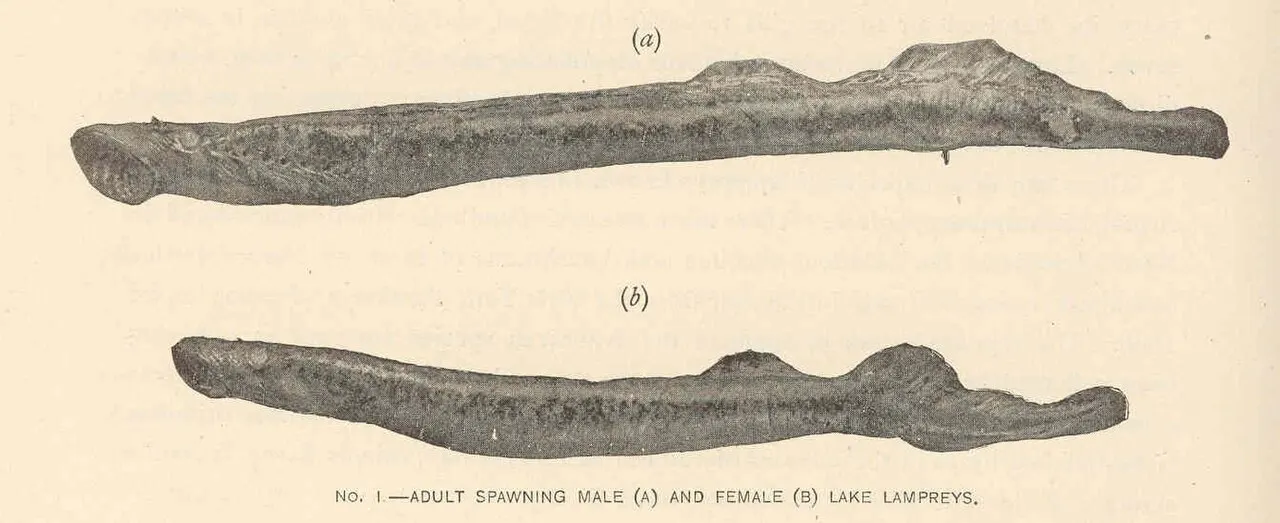
The two catalog species are both restricted to small ranges. The Cowichan Lake lamprey (Entosphenus macrostoma in British Columbia sources) is found only on southern Vancouver Island, in Cowichan, Bear and Mesachie Lakes and their tributaries, with a range of about 176 km2 and an adult population estimated by local experts at 1,000 to 2,000. British Columbia's species summary lists shoreline and residential development, bycatch, drought, water management and sediment from forestry as threats. The lakes and surrounding lands are not protected areas, though provincial law gives some limited habitat protection, and sportfishing rules ban fishing for or keeping the species.
In Australia, Mordacia praecox spends its whole life in fresh water. It was known for many years only from the Moruya and Tuross rivers in southern New South Wales, where it is believed to have gone locally extinct between 1995 and 2003. Other populations are known from the Wallagaraugh River on the New South Wales and Victoria border and from Queensland river regions more than 1,000 km north.
What the catalog lists
The catalog holds two records, both Endangered, one in Petromyzontidae and one in Mordaciidae. That mirrors the group's split between hemispheres. Many other lampreys are not in the catalog's list, which only shows animals the Red List has assessed as Critically Endangered, Endangered or Extinct in the Wild.
Sources for this section
- Lamprey: About 38 living species, three families, fossil age, larval and metamorphosis durations, parasitic and non-parasitic species, threats
- Petromyzontidae: Northern Hemisphere family containing most living lampreys
- Mordacia praecox: Freshwater life cycle, known rivers, local extinction 1995 to 2003, other populations, Endangered 2019
- Cowichan Lake Lamprey, BC Species and Ecosystems Explorer: Range, 176 km2, population estimate, threats, no protected areas, limited provincial protection, fishing ban
Status breakdown
2 records: Endangered 2.
All species
Petromyzontiformes (2)
- Lake lamprey Entosphenus macrostomus EN
- Mordacia praecox EN
The A to Z index lists the species with a full account; the catalog search finds any record by name.
Quick answers
- How many lampreys are in this catalog?
- 2, listed by the IUCN Red List as 2 Endangered.
- What is Petromyzonti?
- Here, Petromyzonti means lampreys. It is a taxonomic class used to group the catalog.
- Where do the statuses come from?
- From the IUCN Red List (version 2026-1), with a link to each species' assessment on iucnredlist.org.