Merostomata in crisis
1 records. Red List version 2026-1
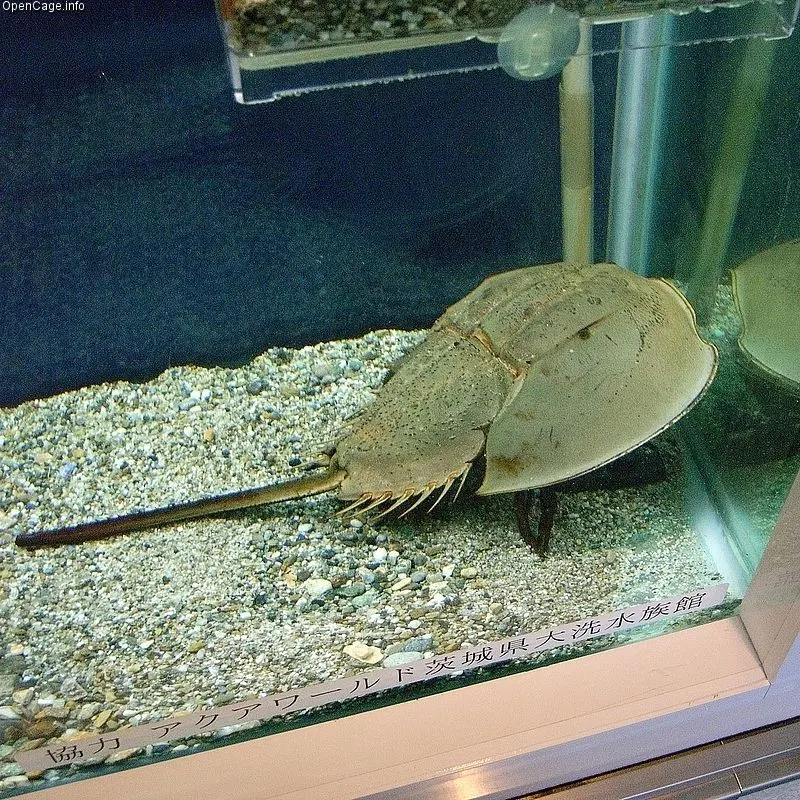
In this catalog, Merostomata stands for horseshoe crabs and their relatives. We list 1 horseshoe crabs that the IUCN Red List records as threatened enough to be Critically Endangered, Endangered or Extinct in the Wild: 1 Endangered.
This is the only member of the group in the catalog, so the whole shelf is one record.
A class is a filing shelf, not a measure of risk: it says nothing about how fast any one species is declining. Status and assessment years come from the IUCN Red List (version 2026-1); how to read an IUCN assessment explains what the categories and criteria mean, and each record links to its own assessment.
Merostomata is the class name used in older classification for horseshoe crabs, and some reference sites still use it. Despite the name they are not crabs. They are arthropods related to spiders and scorpions, with a broad helmet-like shell and a stiff tail spike. Modern works place them in the order Xiphosura.
Only four species are alive today: the Atlantic horseshoe crab (Limulus polyphemus), the mangrove horseshoe crab (Carcinoscorpius rotundicauda), the tri-spine horseshoe crab (Tachypleus tridentatus) and the Indo-Pacific horseshoe crab (Tachypleus gigas). Their group appears in the fossil record about 480 million years ago, and the four living species last shared an ancestor around 135 million years ago.
What they do in nature
Horseshoe crabs live in coastal waters and spawn on shores. Their eggs matter to other animals. In Delaware Bay, the main spring stopover for the rufa red knot, the birds feed on the superabundant eggs and can nearly double their weight in about two weeks, so a drop in crabs can ripple into the bird population.
The tri-spine species is the largest living horseshoe crab. Females can reach about 79.5 cm including the tail and weigh up to 4 kg.
Why these animals are threatened
Shoreline development and bulkheads destroy spawning habitat. Other pressures include overharvesting, use as bait, plastic pollution, and demand as a delicacy. In Malaysia and Indonesia, Indo-Pacific horseshoe crab numbers have fallen sharply since 2010, mainly through overharvesting of egg-carrying females, which has skewed the wild sex ratio.
Their blue blood is also used in medicine. Blood is collected from live crabs, and estimates of how many die afterward range from 3 to 15 percent in one set of figures and 10 to 30 percent in another.
For the tri-spine crab, sources describe long declines. It is reported to be locally extinct in Taiwan, with Hong Kong suspected to be next after a reported fall of more than 90 percent in juveniles. Data from many Asian coasts are patchy.
What the catalog lists
The catalog holds one record, the tri-spine horseshoe crab, which is Endangered, in the order Xiphosurida and family Limulidae. The other three living species are not in the catalog's list. That says nothing about their status beyond which animals the Red List has assessed as Critically Endangered, Endangered or Extinct in the Wild.
Sources for this section
- Horseshoe crab: Four living species, fossil age and divergence, size, threats, biomedical mortality range, Taiwan and Hong Kong, T. gigas sex ratio
- Tachypleus tridentatus: Largest living species, 79.5 cm and 4 kg, Endangered 2019, habitat loss and overfishing
- Animal Diversity Web, Limulus polyphemus: Horseshoe crabs are related to arachnids, not true crabs; Merostomata as the older group name
- US Fish and Wildlife Service, rufa red knot: Delaware Bay stopover, dependence on horseshoe crab eggs, near-doubling of weight in two weeks
Status breakdown
1 records: Endangered 1.
All species
Xiphosurida (1)
The A to Z index lists the species with a full account; the catalog search finds any record by name.
Quick answers
- How many horseshoe crabs are in this catalog?
- 1, listed by the IUCN Red List as 1 Endangered.
- What is Merostomata?
- Here, Merostomata means horseshoe crabs and their relatives. It is a taxonomic class used to group the catalog.
- Where do the statuses come from?
- From the IUCN Red List (version 2026-1), with a link to each species' assessment on iucnredlist.org.