Asteroidea in crisis
1 records. Red List version 2026-1
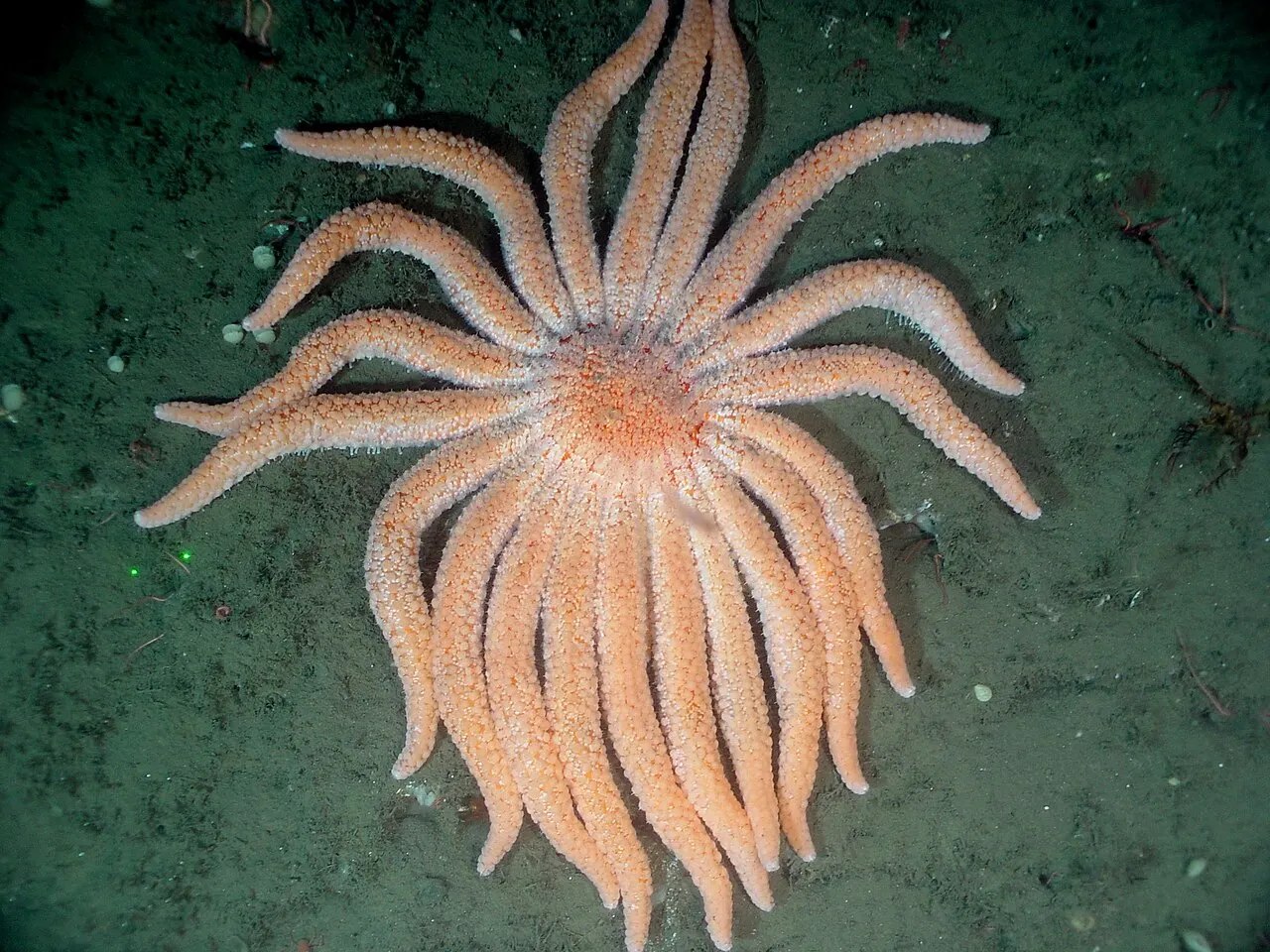
In this catalog, Asteroidea stands for sea stars, often called starfish. We list 1 sea stars that the IUCN Red List records as threatened enough to be Critically Endangered, Endangered or Extinct in the Wild: 1 Critically Endangered.
This is the only member of the group in the catalog, so the whole shelf is one record.
A class is a filing shelf, not a measure of risk: it says nothing about how fast any one species is declining. Status and assessment years come from the IUCN Red List (version 2026-1); how to read an IUCN assessment explains what the categories and criteria mean, and each record links to its own assessment.
Sea stars, often called starfish, make up the class Asteroidea, with about 1,900 living species in seven orders. They have arms that radiate from a central disc, and most are bottom-dwelling predators that eat shellfish, snails and other slow animals. Some filter food from the water or eat detritus.
A few act as keystone species. In a classic 1966 study, removing the ochre sea star from a rocky shore let mussels take over and the number of species fell. The crown-of-thorns starfish shows the other side: it eats coral and has damaged reefs in the Indo-Pacific.
Why these animals are threatened
Disease is the big one. Sea star wasting disease sometimes causes mass die-offs, and Vibrio bacteria can cause a wasting condition in several species. Heat is a second problem: the ochre sea star feeds and grows much less once its body passes 23 C and dies at about 30 C. A 2025 study off British Columbia found that animals in cooler, saltier fjord water survived outbreaks better, which points to climate as a factor, though how it works is still being studied.
What the catalog lists
The catalog holds a single sea star, the sunflower sea star (Pycnopodia helianthoides), in the family Asteriidae. It is the heaviest sea star known, with an arm span up to about 1 m, and it ranges from Alaska to at least northern Baja California, down to depths of at least 435 m. Urchins are a favourite food, which helps keep them from overgrazing kelp.
An outbreak of sea star wasting syndrome from 2013 to 2017 contributed to a sharp decline, and warmer water linked to climate change is also blamed. The species has disappeared from waters off California and Oregon. NOAA Fisheries says no single, systematically collected dataset gives a range-wide population size or long-term trend, so exact losses are uncertain.
The Nature Conservancy, partners and the University of Washington are working toward captive breeding, aimed at helping restore kelp forests. NOAA Fisheries proposed listing the species as threatened under the US Endangered Species Act in a rule published on 16 March 2023, and its species page was last updated in September 2025.
One record says little about sea stars as a whole, a class of about 1,900 species.
Sources for this section
- Wikipedia, Starfish: about 1,900 species, seven orders, feeding, keystone example (Paine), crown-of-thorns, wasting disease, Vibrio, heat thresholds, 2025 BC fjord study
- Wikipedia, Sunflower sea star: size, depth, diet of urchins, decline from 2013, disappearance from California and Oregon, captive breeding by TNC, partners and University of Washington, family
- NOAA Fisheries, Sunflower sea star: range, wasting outbreak 2013 to 2017, no systematic population dataset, 16 March 2023 proposed threatened listing, page updated September 2025
Status breakdown
1 records: Critically Endangered 1.
All species
Forcipulatida (1)
- Sunflower seastar Pycnopodia helianthoides CR
The A to Z index lists the species with a full account; the catalog search finds any record by name.
Quick answers
- How many sea stars are in this catalog?
- 1, listed by the IUCN Red List as 1 Critically Endangered.
- What is Asteroidea?
- Here, Asteroidea means sea stars, often called starfish. It is a taxonomic class used to group the catalog.
- Where do the statuses come from?
- From the IUCN Red List (version 2026-1), with a link to each species' assessment on iucnredlist.org.