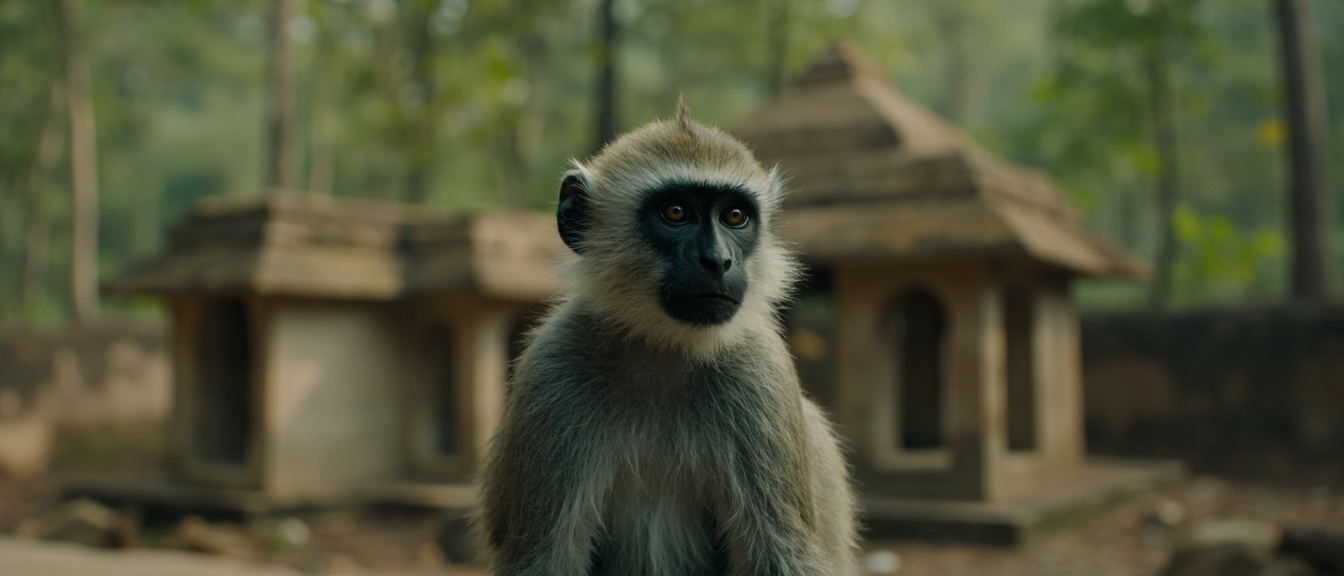
The Tufted Gray Langur
Also known as the Madras gray langur, the tufted gray langur is one of the more successful primates on this list — still relatively common across its range in southern India and Sri Lanka, even as other species decline around it. These langurs are highly adaptable, able to live in forests, urban areas, and temple grounds.
But even adaptable species have their limits. The tufted gray langur is under increasing pressure from habitat destruction, particularly in Sri Lanka, where forest loss has accelerated. They're also sometimes persecuted as crop pests, and in some areas, they're hunted for their meat or for use in traditional medicine.
The tufted gray langur plays an important ecological role: as leaf-eaters, they help disperse seeds throughout the forest. They're also a key prey species for large predators like leopards. If the langurs disappear, the cascade of effects would ripple through the entire forest ecosystem.
What's Killing the Tufted Gray Langur?
Deforestation in Sri Lanka
Hunted for meat and medicine
Persecuted as crop pest
What's Being Done?
How We Got Here
See the Tufted Gray Langur in the Wild
Documentary: Tufted Gray Langur
Latest Conservation News
Help Save the Tufted Gray Langur
Every action counts. Here are proven ways to make a real difference for Tufted Gray Langur conservation.
How You Can Help Daily
Make a Difference Today
I PLEDGE TO
0 people have taken this pledge