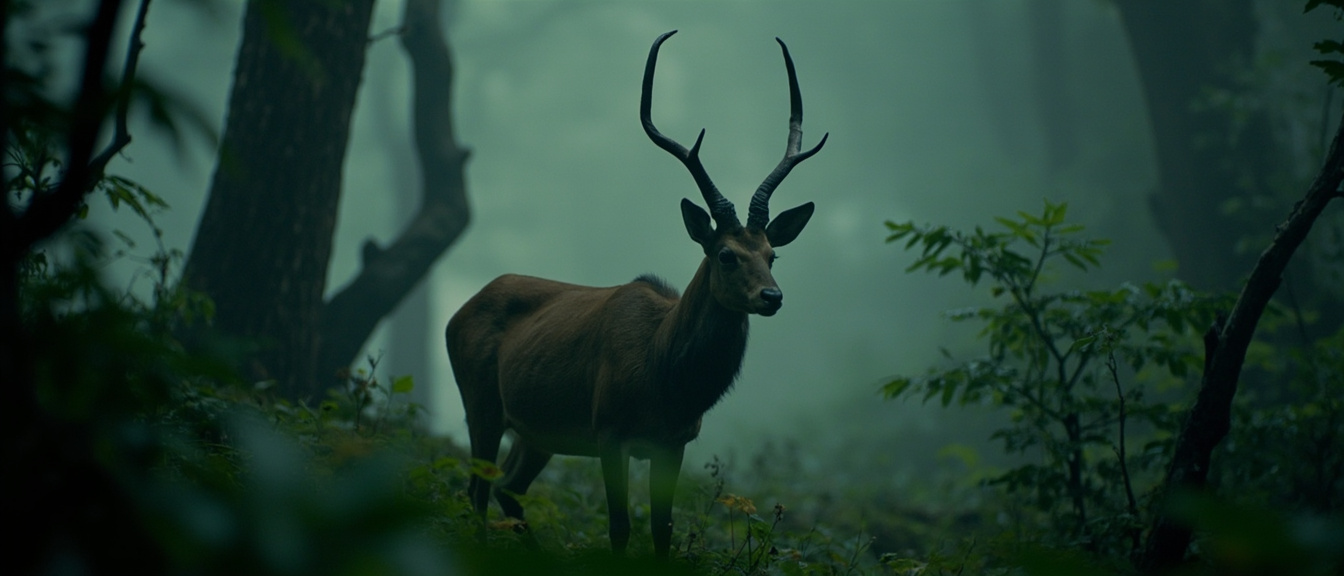
The Saola
No scientist has ever seen a saola in the wild. Not once. Since this creature was discovered in 1992 — the first large mammal discovery in over 50 years — researchers have had to rely on camera traps, tracks, and the occasional carcass to learn about the 'Asian Unicorn.' And yet, this unknown animal may vanish before we ever truly know it.
The saola is scientifically remarkable: it represents an entirely new genus, Pseudoryx, and belongs to the Bovidae family — the group that includes cattle, goats, and antelopes. It has straight, sword-like horns up to 50 centimeters long. Its face bears striking white facial markings unlike any other forest animal. And it lives in one of the most war-torn, inaccessible, and biodiverse regions on Earth.
The real enemy isn't ignorance — it's snares. Thousands of snares set by hunters across the Annamite Mountains. Conservationists have spent decades trying to protect the last saola, but without stopping the snare trade, extinction is not a question of if — it's when.
What's Killing the Saola?
10 snares per km² in some areas
Roads and development break up forest
Bushmeat trade decimates populations
What's Being Done?
How We Got Here
See the Saola in the Wild
Documentary: Saola
Latest Conservation News
Help Save the Saola
Every action counts. Here are proven ways to make a real difference for Saola conservation.
How You Can Help Daily
Make a Difference Today
I PLEDGE TO
0 people have taken this pledge