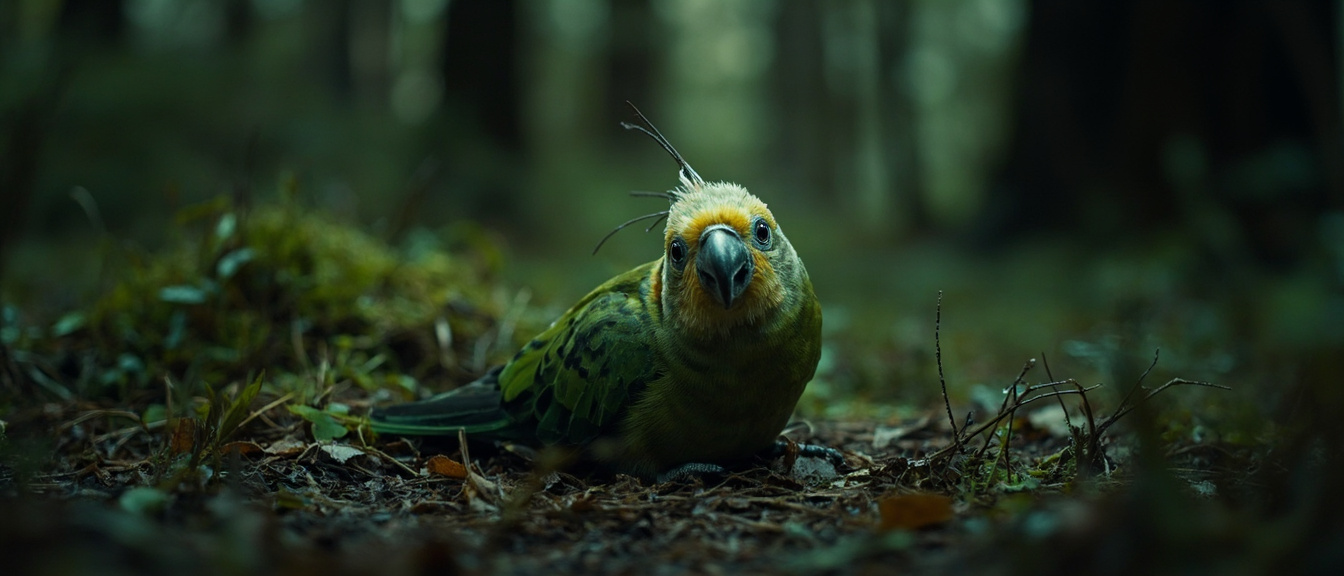
The Kakapo
The kakapo is the world's only flightless parrot, and one of the most extraordinary — and endangered — birds on Earth. These plump, owl-faced creatures are the heaviest parrots in the world, and they smell like musty old books. They're nocturnal, they can't fly, they climb trees (then have to jump out), and they have a unique way of attracting mates: the males dig bowl-shaped holes in the ground and hum. Not sing. Hum.
For centuries, kakapos survived in New Zealand because they had no natural predators — until humans arrived, bringing rats, stoats, cats, and ferrets. Eggs were eaten. Chicks were eaten. Adults were eaten. By the 1970s, the species was thought to be extinct. Then a few were found on Stewart Island. The rescue began.
Today, all 248 kakapos live on three predator-free islands off the coast of New Zealand, where every individual is monitored, every egg is weighed, and every match is made. It's the most intensive conservation program for any species in the world. And it's working — barely. Every single kakapo matters. Every egg is precious. Every successful hatching is a celebration.
What's Killing the Kakapo?
Rats, stoats, cats eat eggs and chicks
All individuals descended from small founder group
No genetic resistance to new pathogens
What's Being Done?
How We Got Here
See the Kakapo in the Wild
Documentary: Kakapo
Latest Conservation News
Help Save the Kakapo
Every action counts. Here are proven ways to make a real difference for Kakapo conservation.
How You Can Help Daily
Make a Difference Today
I PLEDGE TO
0 people have taken this pledge