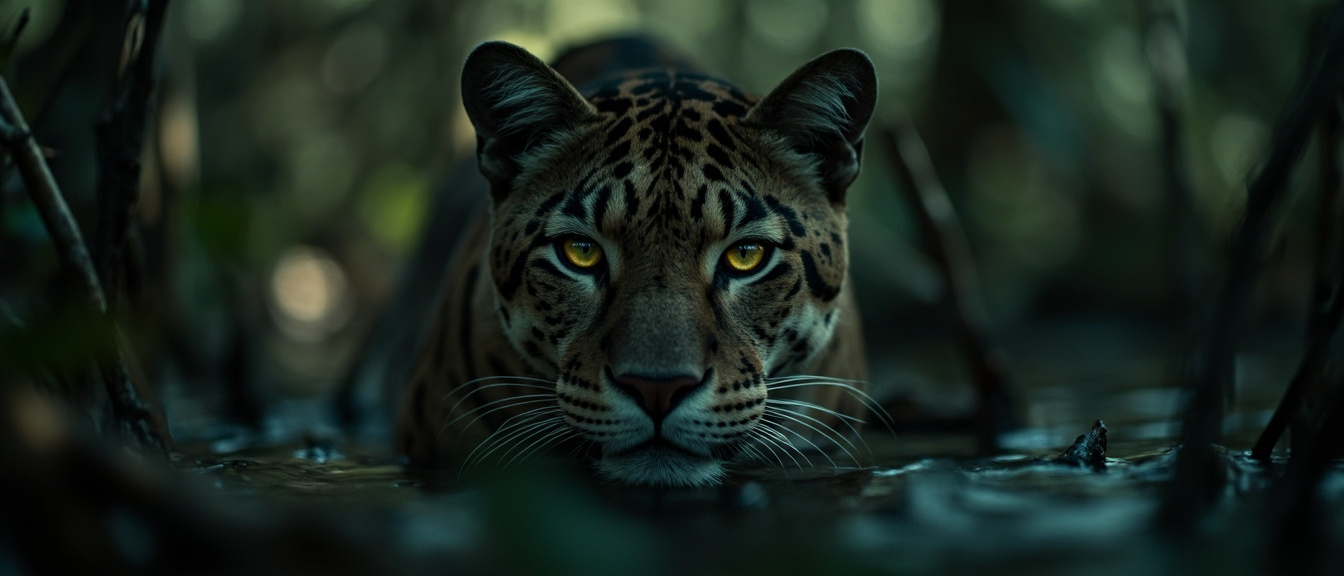
The Florida Panther
The Florida panther is the only cougar population east of the Mississippi River — and it's fighting for its last stand. Decimated by hunting and habitat loss, the remaining population suffers from genetic inbreeding that causes birth defects, heart problems, and low survival rates.
The Florida panther's story is one of near-extinction and controversial rescue. By the 1970s, fewer than 30 remained in the wild. In 1995, wildlife managers made the bold decision to introduce eight Texas cougars into the Florida population to add genetic diversity. It worked — the population began to recover. But the panther's habitat was shrinking, and as Florida's human population exploded, panthers and people increasingly came into conflict.
Today, about 200 Florida panthers roam the forests and wetlands of southern Florida. But they're hemmed in by roads, developments, and water. The genetic problems haven't gone away — inbreeding has left its mark. And every panther hit by a car on Florida's highways is a setback from which the population struggles to recover.
What's Killing the Florida Panther?
Development and roads fragment habitat
Genetic defects from decades of isolation
Highways cut through panther territory
What's Being Done?
How We Got Here
See the Florida Panther in the Wild
Documentary: Florida Panther
Latest Conservation News
Help Save the Florida Panther
Every action counts. Here are proven ways to make a real difference for Florida Panther conservation.
How You Can Help Daily
Make a Difference Today
I PLEDGE TO
0 people have taken this pledge